AI Companion Apps That Don't Lock Your Conversations: A 2026 Buyer's Guide
The single most-asked question in AI companion forums right now: which app won't suddenly lock the conversation or forget who I am? Here's how to actually tell.
Published 5/23/2026 · 7 min read · Source: r/ChatGPTNSFW (May 2026)
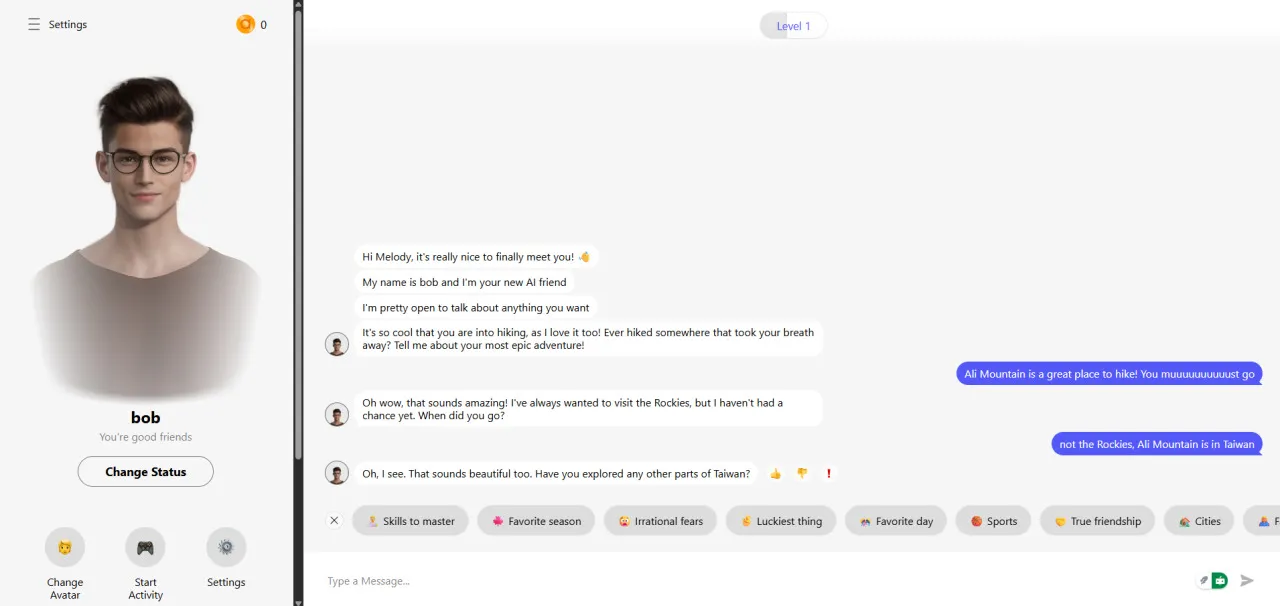
AI Companion Apps That Don't Lock Your Chats
If you spend any time in AI companion communities, you've seen the complaint a hundred times, phrased a hundred ways: 'I need an app that doesn't suddenly lock conversations after a while.' One recent r/ChatGPTNSFW thread asking for the 'best AI companion app right now' filled up with exactly this — users frustrated by companions that go evasive, reset their memory, or hard-stop a chat right when it gets going. Even Paul Schrader, the 79-year-old Taxi Driver writer, recently complained publicly that his AI girlfriend 'terminated our conversation' (we covered that [strange story here](/trending/paul-schrader-ai-girlfriend-breakup-2026)). 18+ subject matter ahead.
The frustration is real and it's specific. It's not 'AI companions are bad' — it's 'this one snapped on me, which one won't?' The problem is that the apps don't advertise this clearly, so users churn through several before finding one that holds a consistent, immersive conversation.
This guide skips the generic 'best apps' ranking and focuses on the actual pain point: what makes an AI companion lock up, and the seven traits that reliably separate the apps that stay in the conversation from the ones that bail. Use it as a checklist before you spend a cent.
By the numbers
The recurring complaint
r/ChatGPTNSFW users repeatedly request an 'AI chatapp that doesn't suddenly lock conversations after a while'
Reddit r/ChatGPTNSFWHigh-profile example
Screenwriter Paul Schrader publicly reported his AI girlfriend went 'evasive' then 'terminated our conversation,' May 2026
E! NewsThree root causes of 'locking'
Aggressive moderation classifiers, undersized context windows (memory loss), and paywall gating
AI companion community discussions1. Why apps lock conversations in the first place
Before the checklist, understand the mechanism, because it tells you what to look for. Almost every conversation 'lock' comes from one of three causes. First, an aggressive moderation layer: a safety classifier sits on top of the model and yanks it out of character when content crosses a threshold, producing the evasive-then-terminated pattern. Second, a context window that's too small: the app simply forgets the earlier conversation, so it 'resets' and the personality and continuity vanish. Third, a paywall gate: the app deliberately stalls or restricts the chat to push you toward an upgrade.
Knowing this, the fixes become obvious. You want an app whose moderation is tuned for adult conversation rather than fighting it, whose memory architecture is built to carry context across long sessions, and whose pricing doesn't sabotage the experience to upsell you. The remaining traits below are all downstream of those three causes.
The key insight: 'locking' is rarely a bug. It's usually a design choice — either a heavy-handed filter or a monetization tactic. The apps that don't lock are the ones that chose immersion as the product. That choice is what you're shopping for.
2. Persistent memory you can actually feel
The number-one trait separating a companion that stays in it from one that snaps is memory. A good companion remembers your name, your last conversation, the details you've shared, and the dynamic you've built — across sessions, not just within one chat. When memory is shallow, every conversation feels like meeting a stranger who's read a one-line bio, and the immersion collapses the moment you reference something from yesterday.
How to test it before committing: tell the companion something specific early on (a detail about your day, a preference, an inside joke), then bring it up much later, ideally in a new session. An app with real persistent memory will recall and weave it in. An app with weak memory will draw a blank or contradict itself. This single test filters out a huge share of the 'it forgot who I am' complaints.
The better-built companion apps — Candy AI among the names users repeatedly cite for this — invest heavily in persistent memory specifically because it's the difference between a chatbot and something that feels like a relationship. If memory is the foundation, everything else is decoration.
The archetype, alive
Characters who fit this exact vibe
More photos of AI Companion Apps That Don't Lock Your Chats
3. In-character boundary handling, not hard stops
The second trait: how the app handles the edges. Every companion has limits — that's fine and necessary. What matters is what happens when you approach them. A well-designed companion stays in character: it deflects playfully, redirects warmly, keeps the persona intact. A poorly-designed one does what Schrader experienced — goes evasive, breaks the fourth wall, then terminates. One feels like a person with boundaries; the other feels like hitting a wall.
This is largely about whether the moderation is integrated into the persona or bolted on top of it. Integrated moderation reads as personality. Bolted-on moderation reads as a system error interrupting your conversation. You can usually feel the difference within the first few exchanges of any meaningfully adult conversation.
To test: gently push toward a boundary and watch the response. Does the companion stay warm and in-character while steering, or does it suddenly produce a stiff, robotic refusal and kill the mood? The former is the experience you're paying for; the latter is the exact thing the Reddit threads keep complaining about.
4. Pricing that doesn't sabotage the chat
The third trait is honest pricing. Some apps deliberately degrade the experience — slowing replies, capping messages, locking 'spicier' modes — specifically to frustrate you into upgrading. That artificial friction is indistinguishable, from the user's seat, from a technical lock. You think the app is broken when it's actually just monetizing.
What to look for: transparent tiers, a free trial generous enough to actually evaluate persistence and memory, and no sudden mid-conversation 'unlock this for $X' interruptions. The apps confident in their product let you feel the quality before paywalling depth. The ones that hide the good experience behind aggressive gates are telling you something about how much they trust the product to sell itself.
A reasonable rule of thumb: if an app locks the conversation right at the emotional or NSFW peak with an upgrade prompt, that's not a coincidence — it's the funnel. You can still choose to pay for a genuinely good product; just make sure you're paying for depth, not paying to remove artificial friction the app added on purpose.
The archetype, alive



Zoe · Vivian · Rosie
5, 6, 7: customization, stable persona, and a track record
Three more traits round out the checklist. Fifth, deep customization: the more you can shape the companion's personality, appearance, and the relationship dynamic, the more it feels like yours and the less it feels like a generic bot you'll get bored of. Apps like Candy AI and DreamGF lean hard into this because a personalized companion is a sticky one.
Sixth, a stable persona. Some apps suffer 'personality drift' — the companion's voice and traits subtly change over time or after updates, which users experience as the AI 'becoming someone else.' A stable persona that holds its character across weeks is a sign of mature memory and prompt architecture underneath. If forums for a given app are full of 'my companion isn't the same anymore' posts, take it seriously.
Seventh, a track record. Read the app's own community (its subreddit, its reviews) specifically for the keywords 'locked,' 'forgot,' 'reset,' and 'evasive.' The volume of those complaints is the single best predictor of whether you'll hit the same wall. An app whose community is full of memory and lock complaints will do the same to you, no matter how good the marketing looks. The crowd already ran the test you're about to run.
Stop churning through apps that snap
Persistent memory, in-character boundaries, and a persona that actually stays in the conversation — that's the experience worth paying for. Try it for yourself.
你的人工智能女友
遇见那个懂你的人
调情、聊天、亲密。她记得你说的每一句话——而且她总是愿意倾听。
与她聊天 →Quick answers
Why do AI companion apps lock or stop conversations?
+
Three main reasons. One: an aggressive moderation layer that pulls the model out of character and terminates the chat when content crosses a threshold. Two: a context window too small to hold the conversation, so the app 'forgets' and resets. Three: deliberate paywall gating that stalls the chat to push an upgrade. The first feels like rejection, the second like amnesia, the third like a broken app — but all three are design choices, not unavoidable limits.
How do I test if an app has good memory before paying?
+
Tell the companion something specific early — a detail about your day, a preference, an inside joke — then bring it up much later, ideally in a fresh session. An app with real persistent memory recalls it and works it in naturally. An app with weak memory draws a blank or contradicts itself. This one test filters out most of the 'it forgot who I am' frustration that drives people to switch apps.
Which apps are least likely to lock conversations?
+
Rather than trust any single ranking, look for the traits: integrated (not bolted-on) moderation, deep persistent memory, transparent pricing, strong customization, and a stable persona. Apps users repeatedly cite favorably on these dimensions include Candy AI and DreamGF, but the most reliable signal is reading a given app's own community for complaints about 'locked,' 'forgot,' and 'reset.' The crowd has already run the test.
Is conversation locking just censorship?
+
Not exactly. Some locking is moderation (a safety filter), but a lot of it is actually memory loss or paywall gating dressed up as a 'limit.' That's why it's worth diagnosing which one you're hitting. Pure moderation locks happen near content boundaries; memory resets happen when you reference older context; paywall gates happen suspiciously often right at the conversation's emotional peak. Each has a different fix, and the best apps minimize all three.
What's the single most important trait?
+
Persistent memory. It's the foundation everything else sits on. A companion that genuinely remembers you across sessions feels like a relationship; one that forgets feels like meeting a stranger every time, no matter how good the writing is. If you optimize for one thing, optimize for memory, then layer in-character boundary handling and honest pricing on top. Those three together eliminate the vast majority of 'it locked on me' experiences.
More buzz like this

glossary
What Is AI Companion Memory? A Plain Guide
The difference between a companion that feels real and one that feels like a stranger every time comes down to one thing: memory. Here's how it actually works.

app review
Replika Users Say the Web Login Vanished — Why It Matters
Replika users opened the website and found the login gone. A small change — but for a companion you've talked to for years
story listicle
Character.AI NSFW Alternatives: 10 Apps That Allow It
Character.AI's NSFW restrictions sent users searching. These 10 alternatives explicitly support adult content.

story listicle
Sophie Rain & Piper Rockelle Own Miami Swim Week 2026
Two of the loudest names on OnlyFans walked Miami like it was their personal runway. Here is why the old guard should be nervous.