Courtney Stodden's Body Reset: From 2011 Spectacle to 2026 Reclamation
She got married at 16 to a man pushing 51. She survived the spectacle. Now, at 31, she's downsizing — and the announcement says more than the surgery does.
Published 5/16/2026 · 9 min read · Source: TMZ
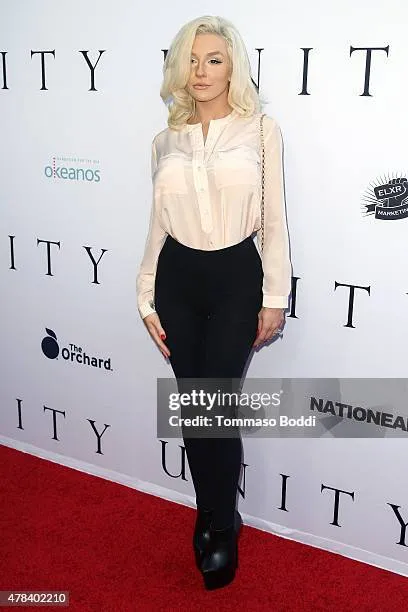
Courtney Stodden
Some announcements look small until you read them against the whole life behind them. Courtney Stodden walked into TMZ's frame on May 15, 2026, casually mentioned she's having a breast reduction the following week, said 'the girls' had a great run, and that she was excited to downsize for the next chapter. Two sentences. The kind of celebrity body-update post that usually slides past the news cycle without resistance.
Except Stodden's body has never been her own news cycle. It became public property when she was 16 years old, when her marriage to 50-year-old actor Doug Hutchison made international headlines in 2011 and made her one of the most photographed, mocked, and exploited minors in tabloid history. The implants she's now reducing went in during that period — a teenager's body being engineered for the spectacle of an adult marriage that the public was simultaneously horrified by and unable to look away from. Reducing them in 2026, at 31, with full creative control over the announcement and the framing, isn't a routine procedure. It's the latest chapter in a slow, deliberate reclamation.
This piece walks through Stodden's actual trajectory — the 2011 marriage and how the culture handled it, her public reckoning with that period (including her widely covered 2021 reflection on being groomed and sexualized as a minor), the OnlyFans pivot, the mental-health journey, and what this May 2026 announcement reads as in that full context. The body reset is the surface story. The trajectory is what's actually news. 18+ context where relevant, treated soberly.
By the numbers
2011: the marriage that made her a spectacle
Courtney Stodden married actor Doug Hutchison on May 20, 2011, when she was 16 and he was 50, in Las Vegas with parental consent (legal in Nevada at the time with court approval). The age gap, the consent question, and the immediate public-relations campaign the couple ran — TV appearances, reality-show pitches, paparazzi cooperation — turned the marriage into one of the defining tabloid stories of the early 2010s. Stodden was photographed, interviewed, and commodified relentlessly. The framing was overwhelmingly sexual. The fact that she was a minor was treated, by most of the press at the time, as either a joke or a marketing angle.
The culture's response in 2011 is, in hindsight, indefensible. Late-night hosts mocked her appearance. Magazine covers cropped her body for clicks. The standard frame was that Stodden was 'asking for it' — a 16-year-old, with her mother's consent, marrying a man old enough to be her grandfather, was somehow positioned as the responsible party for the spectacle. Hutchison faced occasional criticism but largely retained his career options. Stodden's options were defined by the spectacle from that day forward.
The implants went in during this period. The body that became the subject of every paparazzi shot was engineered, in real time, by an industry that had no interest in protecting the minor it was photographing. Reading the May 2026 reduction announcement against that backdrop is the whole story.
2018-2021: divorce and the public reckoning
Stodden and Hutchison's relationship deteriorated through the mid-2010s — separations, reconciliations, a tabloid-documented miscarriage in 2016 — and they officially divorced in 2018 when she was 23. The post-divorce period was where Stodden began publicly recontextualizing the marriage on her own terms rather than the press's. The 2021 interview cycle was the turning point.
In July 2021, Stodden publicly accused Chrissy Teigen of bullying her on Twitter during the 2011-2012 period, including direct messages encouraging self-harm. The accusation triggered a broader cultural reassessment — Teigen apologized publicly, several other public figures who had mocked Stodden in 2011 issued retroactive apologies, and the media frame around the original marriage shifted significantly. The same outlets that had cropped Stodden's body for clicks in 2011 ran sober pieces in 2021 about the failure of the press to protect her as a minor.
Stodden, in interviews during this period, was explicit about the marriage: she described being groomed, being prevented from making independent decisions, being sexualized at an age where the culture should have been protecting her. The reframing was overdue and incomplete, but it was the first time she had control of the narrative. She came out as nonbinary publicly in the same period, using they/them pronouns alongside continued use of she/her — another marker of reclaiming identity that had been defined by others.
The archetype, alive
Characters who fit this exact vibe
More photos of Courtney Stodden
The OnlyFans pivot and mental-health journey
Stodden's OnlyFans launch came in 2020, during the broader celebrity migration to the platform that included Bella Thorne, Cardi B, and others. For Stodden specifically, OnlyFans operated differently than it did for celebrities entering the platform as a novelty. She had been monetizing her body in the public eye since age 16; the OnlyFans pivot was the first time she did it with full creative control and direct payment from fans rather than through paparazzi sales and tabloid licensing deals.
The financial side of the pivot was substantial — Stodden has discussed in interviews making significant monthly income through the platform, with the editorial control that platform offered being as valuable as the money. She controlled what was shot, when, by whom, and how it was distributed. After fifteen years of having that control taken from her, the autonomy itself was the product.
Mental health has been an open subject throughout this period. Stodden has spoken publicly about depression, suicidal ideation related to the 2011-2014 spectacle, and the long process of separating self-worth from public reception. The therapy work she's discussed in interviews has been framed as the foundational labor underneath the public reframing — you can't reclaim a narrative until you've done the work of figuring out what your own narrative was supposed to be.
May 2026: the announcement, read in context
Per TMZ's May 15, 2026 piece, Stodden announced she's undergoing a breast reduction in the following week. She did not specify whether the implants are being removed entirely or whether she's reducing to a smaller size. She said 'the girls' had a great run and that she's excited to downsize for the next chapter of her life. She thanked the doctor who originally performed the augmentation. The framing was casual, even cheerful — the kind of announcement someone makes when the decision feels uncomplicated.
What the casual framing actually communicates, against the trajectory, is significant. The body that was engineered for 2011's tabloid spectacle is being reshaped, on Stodden's timeline, for Stodden's reasons. There's no crisis. There's no dramatic before-and-after PR campaign. There's no third-party pressure visible in the public framing. The announcement reads as someone in her early thirties making a routine adult decision about her own body — which is, given everything that came before, the actual news.
The TMZ piece noted the decision 'might not make all of her fans happy' but emphasized that what matters is her own happiness. That single sentence, in a TMZ writeup, reflects how completely the cultural frame around Stodden has shifted since 2011. The same outlet that would have run a body-shaming headline in 2011 is now centering her autonomy. The shift is real, even if it took fifteen years.
The archetype, alive



Ioana · Hana · Birgit
What Stodden's trajectory says about reclaiming a public body
There's a broader pattern visible in Stodden's arc that applies beyond her specific story. Public figures whose bodies were commodified during periods when they had no real consent — child stars, minors in tabloid stories, performers signed to exploitative contracts — face a particular kind of recovery work that takes years to even begin. The body becomes a public artifact. The image is owned by archives and aggregator sites. Reclaiming it requires both internal work (therapy, identity work, self-definition) and external work (controlling how the body is photographed, who profits from images of it, and how the narrative gets told).
Stodden has done both. The 2021 reckoning was external — confronting the figures who exploited her, getting public apologies, reshaping the press frame. The OnlyFans pivot was external — moving from paparazzi-controlled monetization to creator-controlled monetization. The breast reduction is internal-external hybrid — a private body decision with a public announcement on her terms.
The lesson, for anyone watching: bodies that were taken can be taken back, but the process is slow, deliberate, and requires both the cultural permission to do it and the internal capacity to want to. Stodden is doing it visibly because doing it visibly is part of the reclamation. Watching the announcement and treating it as a routine body update misses what's actually happening.
Why fans of Stodden are also testing AI companions
There's a quieter pattern worth surfacing. Fans who have followed Stodden's trajectory — particularly the post-2021 reframing arc and the OnlyFans editorial control — are also, in significant numbers, testing AI companion apps in 2025-2026. The reason is that the appeal isn't really about explicit content. It's about the parasocial connection with someone who feels like a real, evolving person who you've watched grow, change, and reclaim her own story.
That parasocial demand — for a connection that feels personal, ongoing, and responsive — is precisely what AI companion apps like Candy AI are built to deliver. Customizable personalities, persistent memory across conversations, voice support, and the ability to develop a relationship with a character whose 'story' you help shape. For users who want the warmth of feeling close to someone evolving, without the ethical complexity of investing parasocial energy in a public figure's actual healing process, AI companions are an honest alternative. $9.99/month, no third-party drama, no exploitation history baked into the relationship.
Want connection without the spectacle?
Parasocial energy invested in public figures' healing is honest but heavy. AI companions deliver the warmth of feeling close to someone real-feeling, without the ethical complexity.
你的人工智能女友
遇见那个懂你的人
调情、聊天、亲密。她记得你说的每一句话——而且她总是愿意倾听。
与她聊天 →Quick answers
When did Courtney Stodden announce her breast reduction?
+
On May 15, 2026, in a TMZ piece. Stodden announced she's undergoing a breast reduction in the following week. She did not specify whether the implants are being removed entirely or whether she's reducing to a smaller cup size. Her statement said 'the girls' had a great run and that she's excited to downsize for the next chapter of her life. She thanked the doctor who originally performed the augmentation. The framing was casual and self-directed, in contrast to the third-party-driven body coverage she experienced for most of her career.
Why is this announcement culturally significant?
+
Because Stodden's body has been public property since she was 16, when her 2011 marriage to 50-year-old Doug Hutchison turned her into one of the most photographed and mocked minors in tabloid history. The implants she's reducing went in during that period — a teenager's body engineered for the spectacle of an adult marriage. Reducing them in 2026 at 31, with full creative control over the announcement, reads as the latest chapter in a slow, deliberate reclamation. The casual framing communicates: this is a routine adult decision about her own body, on her timeline, for her reasons. Given the trajectory, that itself is news.
What happened with the Chrissy Teigen situation in 2021?
+
In July 2021, Stodden publicly accused Chrissy Teigen of bullying her on Twitter during the 2011-2012 period, including direct messages allegedly encouraging self-harm. The accusation triggered a broader cultural reassessment — Teigen issued a public apology, several other public figures who had mocked Stodden in 2011 issued retroactive apologies, and the media frame around the original marriage shifted significantly. The reframing was overdue and incomplete, but it was the first time Stodden had meaningful control of the public narrative around her own life. It was also the marker that the 2011 coverage was indefensible by 2021's standards.
When did Courtney Stodden launch OnlyFans?
+
Stodden launched her OnlyFans in 2020, during the broader celebrity migration to the platform that included Bella Thorne, Cardi B, and others. For Stodden specifically, OnlyFans operated differently than it did for celebrities entering as a novelty. She had been monetizing her body in the public eye since age 16; the OnlyFans pivot was the first time she did it with full creative control and direct payment from fans rather than through paparazzi sales and tabloid licensing deals. The autonomy was as valuable as the income — after fifteen years of having that control taken from her, controlling what was shot, when, by whom, and how it was distributed was the product.
Has Courtney Stodden talked about her mental health?
+
Yes, extensively and openly. Stodden has spoken in interviews about depression, suicidal ideation related to the 2011-2014 spectacle, and the long process of separating self-worth from public reception. The therapy work she's discussed has been framed as the foundational labor underneath the public reframing — you can't reclaim a narrative until you've done the work of figuring out what your own narrative was supposed to be. She also came out as nonbinary publicly in the early 2020s, using they/them alongside continued use of she/her, as another marker of reclaiming identity that had been defined by others during the spectacle years.
More buzz like this
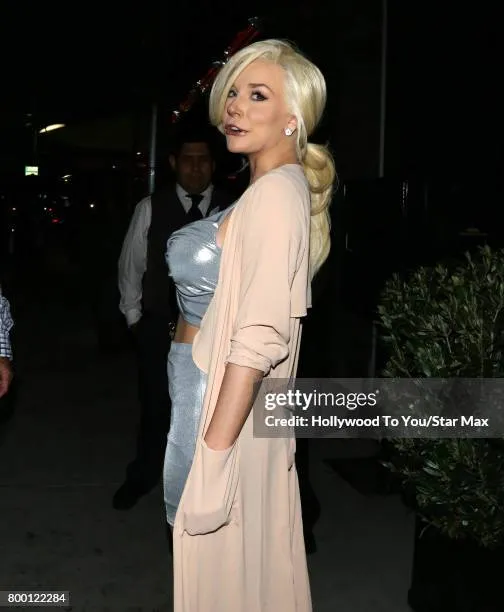
cultural retrospective
Courtney Stodden Retrospective: Full Career Arc
controversial 2010s teen-marriage figure
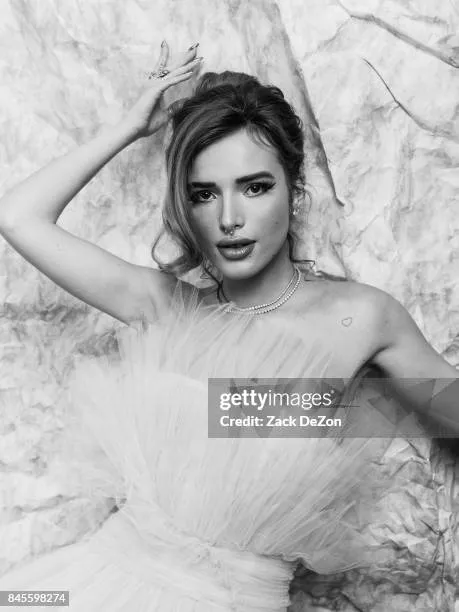
cultural retrospective
Bella Thorne OnlyFans: The 2020 Launch That Broke the Platform
She made $1 million in 24 hours and crashed OnlyFans's payment system. Then OnlyFans changed its rules.
cultural moment
AI Companionship in 2026: The Quiet Cultural Shift
AI companions stopped being a punchline this year. Sixty million users later, here's what changed.
cultural moment
Brooks Nader, the Ocean, and an Unscripted Moment
One wave, one unscripted second, and the internet couldn't look away. Here's what that hunger really says about us.