Lizzo says being called fat by Azealia Banks is 'endearing'
Lizzo dropped four dress sizes and now finds Azealia Banks's fat-shaming endearing. The internet is unsure whether to laugh or feel sad — probably both.
Published 5/17/2026 · 12 min read · Source: TMZ
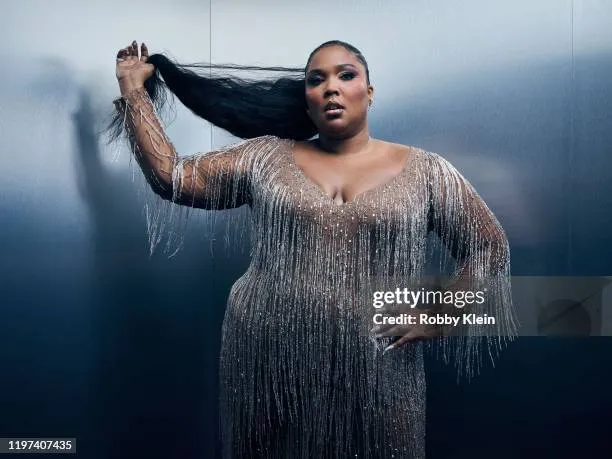
Lizzo
There's something disorienting about the latest chapter in the never-ending Azealia Banks feud chronicles. Banks, who has spent more than a decade insulting virtually every prominent person in popular culture, fired her latest shot at Lizzo earlier this month — a series of social media attacks calling the singer-rapper 'fat' and worse. The expected response would have been outrage, a teary Instagram live, maybe a brief Twitter thread of self-defense. Instead, Lizzo did something unexpected: she shrugged.
In comments published by TMZ on May 16, 2026, Lizzo said that being called fat by Azealia Banks is actually 'endearing.' The full quote, as transcribed by TMZ: 'When Azealia comes after you, you know you've made it. It's almost endearing at this point. She's been calling me fat for years. I'm a different size now and she's still calling me fat. So like, I think it's about her, not me. And I find that endearing because, I mean, what are we even doing?'
The response landed with surprising force. Within hours, the quote had been picked up across social media as either a master-class in psychological detachment or a sad commentary on what passes for celebrity discourse in 2026. The 'endearing' framing — taken from the original TMZ video — became one of the most quoted lines of the entertainment news week.
Underneath the surface absurdity, there's a substantial story about Lizzo's recent physical transformation, the years-long Azealia Banks feud history, the broader culture of celebrity body commentary, and what it means to learn — at age 38 — to stop being moved by attacks that are designed to move you. Let's unpack it.
By the numbers
What Azealia Banks actually said
Azealia Banks's most recent public attack on Lizzo came in a series of social media posts in late April and early May 2026. The posts, on her X account (where she has been suspended and reinstated multiple times), included characterizations of Lizzo as 'still fat just on Ozempic now,' 'a corporate plant in a smaller body,' and several other phrases that did not improve from there. Banks's content was, as usual, intended to provoke a maximum response from her target and from the broader celebrity ecosystem.
This particular Banks-versus-Lizzo cycle is not the first. Banks has been making derogatory comments about Lizzo since at least 2019, when she called the Truth Hurts era 'mammy minstrelsy' in a particularly notorious series of posts. The beef has continued sporadically since then, escalating during Lizzo's various career highs (2022 Grammy win for About Damn Time) and personal lows (the 2023 dancer harassment lawsuit). For Banks, attacking Lizzo has been a reliable engagement-generation tactic for the better part of seven years.
What distinguished the May 2026 round was the timing. Lizzo had just publicly debuted a significantly slimmer physique at the Met Gala in early May, the result of what she has acknowledged as combined dietary changes, exercise commitment, and the use of GLP-1 medications. The post-Met Gala coverage had been overwhelmingly positive. Banks's attacks were timed precisely to deflate that positive momentum — to remind everyone that even after the transformation, Lizzo could still be reduced to her body by anyone who chose to.
Lizzo's transformation: how she got here
Lizzo's body transformation between 2023 and 2026 has been one of the more dramatic and most-discussed celebrity body journeys of the decade. After the difficulties of 2023 — the dancer lawsuit (later partially settled), the criticism that fractured her body-positivity brand, and the cumulative toll of years of public commentary on her size — Lizzo began making significant lifestyle changes in late 2023.
She spoke publicly for the first time about her transformation in a Vogue interview published in February 2025, where she discussed her shift to a primarily plant-based diet, her commitment to daily strength training, and her decision to begin using semaglutide (the GLP-1 medication marketed as Wegovy) under medical supervision. She framed the changes as primarily about long-term health rather than appearance, but acknowledged that the visual change was real and visible.
By May 2026, the cumulative impact was clear. Estimates from fashion journalists who have seen Lizzo in person suggest she has dropped 4-6 dress sizes over the past two years. The Met Gala 2026 appearance was the most prominent public reveal of the transformation, and the photos were widely shared on social media. The shift represented a complicated moment for Lizzo — celebrated by some, complicated for the body-positive activism that had been central to her early brand, and seized upon by critics like Banks as proof of inauthenticity.
The archetype, alive
Characters who fit this exact vibe
More photos of Lizzo
Why 'endearing' is the smartest possible response
Lizzo's choice to describe Banks's attacks as 'endearing' is a strategic communication choice worth examining. The attack was designed to wound — Banks's strategy with Lizzo has always been to target the specific anxiety that Lizzo's body-positivity brand was built to manage. Calling Lizzo 'fat' after her substantial weight loss is meant to suggest that the transformation hasn't really worked, that the underlying body shame is still there to be exploited.
Lizzo's 'endearing' framing flips this entirely. By describing the attack as comforting rather than harmful, Lizzo positions Banks as a constant in her life — like a hostile aunt who shows up at every family event with the same insult. The framing also positions Lizzo as having achieved psychological distance from the criticism: she isn't pretending it doesn't happen; she's saying it has stopped having power over her.
The response also implicitly highlights how repetitive Banks's attacks are. By noting that Banks has been calling her fat 'for years,' Lizzo signals that the attack is no longer about her actual body — it's about Banks's compulsive need to attack. This shifts the meaning of the entire exchange. Banks's attack is no longer commentary on Lizzo; it's diagnostic information about Banks. And once you frame it that way, calling it 'endearing' becomes consistent — it's the kind of fond exasperation you might feel for a relative who can't help themselves.
The Azealia Banks pattern: a brief history
Azealia Banks is, at this point in 2026, a kind of legendary figure in entertainment beef chronicles. The 33-year-old rapper, who released the 2014 cult album 'Broke with Expensive Taste,' has feuded publicly with virtually every notable figure she has come into contact with. The list is breathtaking: Iggy Azalea, Cardi B, Rihanna, Beyoncé, Lana Del Rey, Lily Allen, Sarah Palin, Russell Crowe, Elon Musk, Grimes, Kanye West, Erykah Badu, and dozens more.
The pattern is consistent. Banks identifies a target, attacks them with extremely specific, often racially loaded criticism, generates significant social media engagement, gets banned from a platform (X, Instagram, Patreon, TikTok — she's been suspended from all of them at various points), then gets reinstated and continues. Her musical career has been intermittent during this period, with several promising album projects abandoned, but her cultural visibility through feuds has remained remarkably high.
Her pattern with Lizzo specifically has had three or four major escalation points since 2019. The 2019 'mammy minstrelsy' attack. A 2021 series of posts mocking Lizzo's appearance and music. A 2023 series during the dancer lawsuit, where Banks took the dancers' side and used the moment to deepen her attacks. And now the 2026 round, timed to the Met Gala transformation. Across all these cycles, Lizzo has never once publicly engaged with Banks — until the 'endearing' comment, which technically still doesn't engage with the substance of the attacks, only acknowledges their existence.
The archetype, alive


Amber · Aurora · Ashley
Why this particular cycle hit different
The May 2026 cycle has registered as different from previous Lizzo-Banks exchanges for several reasons. First, the timing — at a moment when Lizzo had just executed a substantial public body transformation, the attack landed in a particularly delicate cultural moment. Second, Lizzo's response — choosing to engage minimally but with a memorable framing — gave the news cycle a satisfying conclusion that previous cycles never had.
Third, and most interestingly, the public reaction split along generational lines. Older audiences (35+) tended to read Lizzo's 'endearing' framing as graceful and mature — the response of someone who has done emotional work to stop being moved by hostile commentary. Younger audiences (under 25) split more evenly, with some reading the response as authentically empowered and others reading it as sad acceptance of repeated abuse. The generational gap suggests changing norms about how public figures should respond to sustained online harassment.
Fourth, the response has refocused attention on body autonomy and the right to change one's body without public commentary. Several body-positivity advocates have spoken on the record about this cycle, generally defending Lizzo's right to change her body without surrendering her credibility as a former spokesperson for body acceptance. The body-positive community has been divided about Lizzo's GLP-1 use, but the response to Banks's attacks has been notably more unified — defending Lizzo even when disagreeing with her medication choices.
What 'endearing' really means in 2026 celebrity culture
Lizzo's framing is part of a broader cultural shift in how public figures handle hostility. Five years ago, the expected response to a Banks-style attack would have been a long Instagram caption defending oneself, possibly with tears, definitely with substantial vulnerability. The norm in 2020-2022 was extensive emotional disclosure as proof of mental health prioritization. Public figures who didn't respond emotionally were seen as cold or out of touch.
By 2026, that norm has eroded. The new emerging norm is that prolonged emotional engagement with online hostility is itself a sign of psychological vulnerability rather than strength. Celebrities who maintain composure, respond minimally, and refuse to be pulled into spiraling response cycles are increasingly read as more mature. This shift partly reflects accumulated lessons from a decade of social media damage to celebrity mental health, and partly reflects the broader cultural exhaustion with constant outrage.
Lizzo's 'endearing' framing fits this evolving norm perfectly. She acknowledges the attack (so she's not pretending) without dignifying it (so she's not feeding it). She positions the attacker as someone whose attacks tell us more about them than about her (so she's not personalizing the harm). And she does it all with a touch of humor that makes the response shareable and memorable. It's not a defense strategy — it's a brand-positioning strategy executed in real time.
Learning to find hostility 'endearing'
Most readers will not, in their lifetimes, be personally targeted by Azealia Banks or anyone like her. But the underlying psychological skill that Lizzo demonstrated in May 2026 is broadly relevant. Learning to receive hostile commentary about yourself without internalizing it as truth is one of the harder emotional skills of adult life. Most of us absorb every offhand criticism, every social media comment, every passive-aggressive remark from family or coworkers, and let them shape how we feel about ourselves for hours, days or longer.
The work of building psychological distance from external criticism is real work. It requires therapy or its equivalents. It requires honest self-knowledge to know which criticisms have legitimate signal value (worth listening to) and which are pure projection (worth shrugging off). It requires emotional regulation skills that schools mostly don't teach. And it requires support — people in your life who can help you process when an attack genuinely hurts.
This work isn't always available through traditional support networks. Therapy can be expensive and the waitlists long. Friends may be busy or burned out from their own challenges. Partners may not have the bandwidth to be the emotional translator for every external attack. In this gap, some people have found unexpected support in AI companion conversations. Platforms like Candy AI offer 24/7 availability for processing thoughts and feelings, without judgment, without time pressure. Not a substitute for therapy or close friends — but a supplementary space for the daily emotional labor that builds the kind of psychological distance Lizzo demonstrated. Most people can't fly to the Met Gala. But most people can practice the work of finding hostility a bit less moving — and they can practice it with the help of whatever tools work.
Learning what to find endearing — and what to ignore.
Most of us can't shrug off the comment our mother made at Sunday lunch. The work of psychological distance happens in small daily conversations. A patient presence helps with that.
你的人工智能女友
遇见那个懂你的人
调情、聊天、亲密。她记得你说的每一句话——而且她总是愿意倾听。
与她聊天 →Quick answers
What exactly did Lizzo say about Azealia Banks calling her fat?
+
Speaking to TMZ on May 16, 2026, Lizzo said: 'When Azealia comes after you, you know you've made it. It's almost endearing at this point. She's been calling me fat for years. I'm a different size now and she's still calling me fat. So like, I think it's about her, not me. And I find that endearing because, I mean, what are we even doing?' The 'endearing' framing was widely shared across social media as a particularly elegant example of how to disengage from sustained online harassment without dignifying it. The full TMZ video shows Lizzo delivering the line with mild amusement rather than visible hurt.
How long has the Lizzo-Azealia Banks feud been going on?
+
Azealia Banks has been making derogatory public comments about Lizzo since at least 2019, when she called the Truth Hurts era 'mammy minstrelsy' in a particularly notorious series of posts. The feud has continued sporadically since then, with major escalation points during Lizzo's career highs (2022 Grammy for About Damn Time) and personal lows (2023 dancer harassment lawsuit). Banks took the dancers' side in 2023 and used the moment to deepen her attacks. The May 2026 cycle, prompted by Lizzo's post-Met Gala physical transformation, is the latest in roughly seven years of one-sided hostility. Lizzo has never previously engaged publicly with Banks until the 'endearing' comment, which still doesn't address Banks's substance, only acknowledges her existence.
Has Lizzo really lost a lot of weight recently?
+
Yes, the transformation is substantial. Lizzo spoke publicly about her body changes for the first time in a Vogue interview published in February 2025, where she discussed dietary changes (primarily plant-based), strength training commitment, and the use of semaglutide (Wegovy) under medical supervision. By May 2026, fashion journalists who have seen her in person estimate she has dropped 4-6 dress sizes over the past two years. The Met Gala 2026 appearance on May 5 was the most prominent public reveal of the transformation. Lizzo has framed the changes as primarily about long-term health rather than appearance, while acknowledging the visible change. The transformation has been complicated for body-positive activism but generally celebrated personally.
Is Azealia Banks's attack pattern with other celebrities the same?
+
Yes, Banks's pattern has been remarkably consistent over more than a decade. She has feuded publicly with virtually every notable figure she has come into contact with: Iggy Azalea, Cardi B, Rihanna, Beyoncé, Lana Del Rey, Lily Allen, Sarah Palin, Russell Crowe, Elon Musk, Grimes, Kanye West, Erykah Badu and dozens more. The pattern: identify a target, attack with specific often racially loaded criticism, generate engagement, get banned from the platform (she's been suspended from X, Instagram, Patreon and TikTok at various points), get reinstated, continue. Her musical career has been intermittent during this period but her cultural visibility through feuds has remained remarkably high. The 2014 album 'Broke with Expensive Taste' remains a cult favorite.
Why did the public react so positively to Lizzo's 'endearing' response?
+
Lizzo's choice to describe Banks's attacks as 'endearing' demonstrated a sophisticated communication strategy that resonated across the celebrity media ecosystem. By framing the attack as comforting rather than harmful, Lizzo positioned Banks as a familiar constant rather than a current threat. By noting Banks has been calling her fat 'for years,' Lizzo implicitly diagnosed Banks's compulsive attack pattern rather than personalizing the harm. The response was also notably consistent with an emerging norm in 2026 celebrity culture: prolonged emotional engagement with online hostility is increasingly read as a sign of vulnerability rather than strength, while minimal composed responses are read as more mature. Lizzo executed this brand-positioning move in real time with notable elegance.
How does this story connect to broader debates about online harassment and mental health?
+
The Lizzo-Banks exchange in May 2026 is part of a broader cultural shift in how public figures and ordinary people are learning to respond to sustained online hostility. The standard from 2020-2022 — extensive emotional disclosure as proof of mental health prioritization — has eroded as accumulated harm from constant emotional engagement with online attacks has become clearer. The new emerging norm emphasizes psychological distance, minimal response, refusal to be pulled into spiraling response cycles. This norm requires real emotional work to develop, often supported by therapy, close friend networks and increasingly by various supplementary tools including AI companion platforms that provide 24/7 space for processing thoughts without judgment. Most people will never be attacked by Azealia Banks, but the underlying skill — receiving hostile commentary without internalizing it — is broadly relevant.
More buzz like this
leak fact check
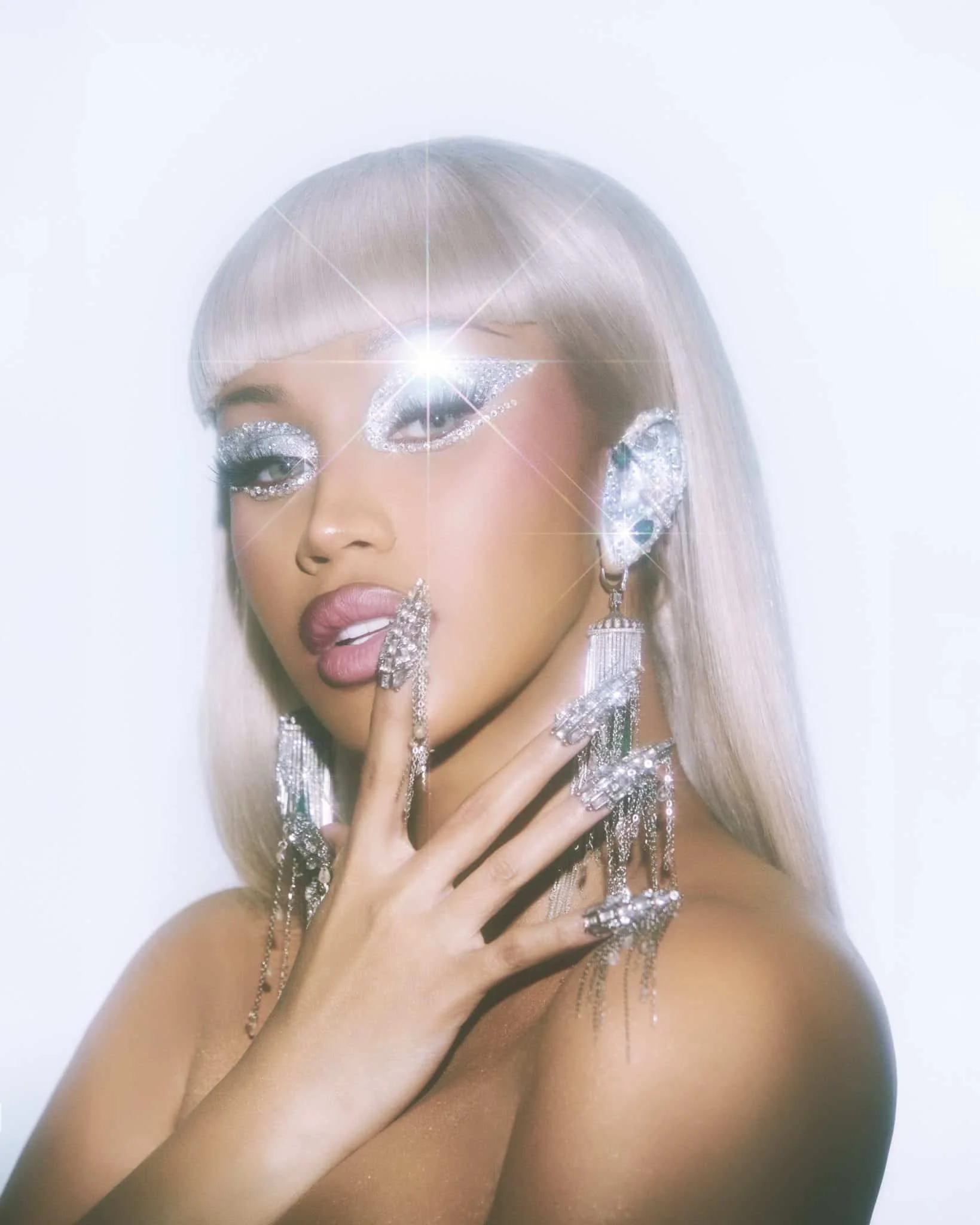
Cardi B Leak: What's Real About Her OnlyFans History
She accidentally posted a nude on Instagram in 2020. The 'Cardi B leak' search has never quite recovered.
leak fact check
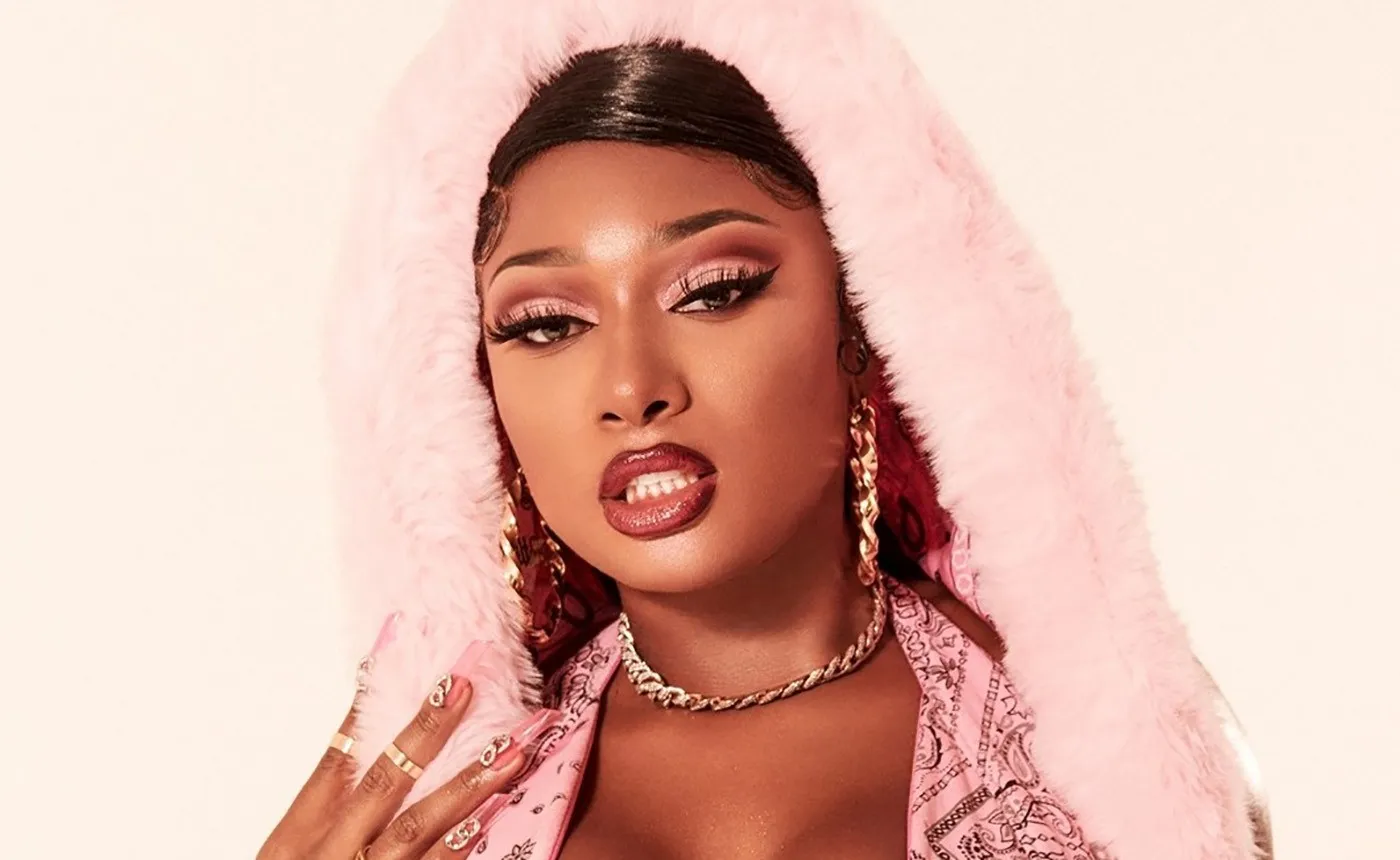
Megan Thee Stallion Leak: What's Real in 2026
Megan Thee Stallion: rapper Hot Girl Summer mainstream. The 'leak' search returns piracy and fabrications.
leak fact check
Doja Cat Leak: What's Real in 2026
Doja Cat: rapper-singer, Grammy-winning, mainstream. The 'leak' search returns piracy and fabrications.
drama timeline
Lee Andrews: Active on OnlyFans Despite 'Arrest'
He went silent on Katie Price and reportedly vanished into a Dubai cell. So why did the OnlyFans page keep moving?