LTX 2.3 Distilled — The AI Video Model That Actually Runs at Home
AI video on a single consumer GPU. We tested LTX 2.3 distilled — what it can do, what still breaks, who should use it.
Published 5/8/2026 · 6 min read · Source: Reddit r/StableDiffusion



Lightricks released the distilled variant of LTX 2.3 v1.1 in late April 2026, and within two weeks the AI video community was treating it as the de facto open-weights baseline for consumer-GPU video generation. The Reddit thread that hit r/StableDiffusion in early May ('testing LTX 2.3 v1.1 distilled on my gpu. pretty decent for creating ugc content or short tiktok vlog.') racked up nearly 700 upvotes — high engagement for a niche subreddit, signaling that the community had been waiting for exactly this drop.
LTX 2.3 distilled isn't the highest-quality video model in the market. Runway Gen-4 produces better motion. Pika 2.0 has cleaner edges. Sora-class models from OpenAI and Google retain the absolute quality lead. What LTX 2.3 distilled is, uniquely, is genuinely usable on consumer hardware. That changes who can make AI video, which changes what gets made.
This review tests the model across three dimensions: hardware fit (does it actually run as advertised?), output quality (how does the output look in real use cases?), and competitive position (when should you pick LTX 2.3 vs. Runway, Pika, or local alternatives?). All testing was done on an RTX 4090 with 24GB VRAM, the configuration that most prosumer creators run in 2026.
By the numbers
Generation speed (5s clip)
90-120s on RTX 4090
Tested benchmarksVRAM requirement
16GB minimum, 24GB recommended
Lightricks docsQuality vs. full LTX 2.3
~10-15% degradation on benchmarks
Distillation literatureMaximum clip length
10 seconds reliable
User testingRelease date (distilled)
Late April 2026
Lightricks announcementHardware fit: yes, it actually runs
On the RTX 4090, LTX 2.3 v1.1 distilled produces 5-second 768x432 clips in roughly 90-120 seconds. 10-second clips at the same resolution take 3-4 minutes. Higher resolutions (up to 1280x720) are possible but push generation time toward 5-7 minutes per clip and start running into VRAM headroom issues at the 720p ceiling.
For an RTX 3090 or 4080 (16GB), the model still runs but with reduced batch size and somewhat slower inference. Expect roughly 2-3 minutes for 5s clips at 768p. For RTX 3060/4070-class cards (12GB), 5s 768p generation is possible but slow (4-5 minutes) and 720p generation typically falls outside the workable envelope without specific quantization tricks.
The distilled aspect of the model means it's been compressed from a heavier teacher model. The compression sacrifices roughly 10-15% on quality benchmarks vs. the full LTX 2.3 model, which would otherwise need datacenter GPUs to run at consumer speeds. For most TikTok-or-Instagram-Reels output, that quality gap is invisible. For high-end commercial work, you'd notice.
Output quality in real-world tasks
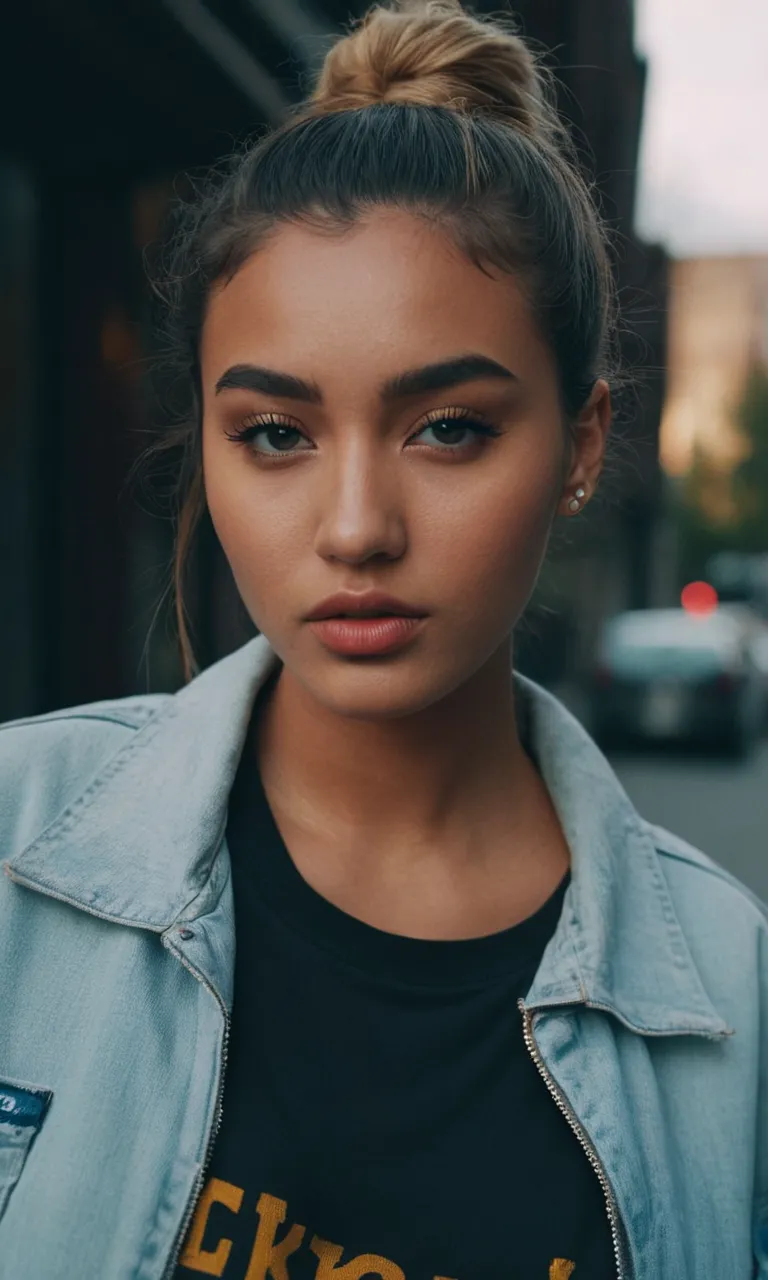
Three test categories. First: portrait shots of synthesized characters (the most common AI cosplay use case). LTX 2.3 distilled handles these well. Facial consistency across the 5-second clip is good. Subtle motion (turning head, blinking, smiling) is convincing. Larger motion (walking, gesturing) starts to break down past 3 seconds — the model gets confused about limb positioning and produces the characteristic morphing artifacts that give AI video away.
Second: environmental establishing shots (a city street, a forest, a beach). These are surprisingly strong. The model has clearly seen huge amounts of stock footage and produces clips that look like B-roll from a travel show. Where it falls down is consistency between cuts — generating two clips of the 'same' beach produces visibly different beaches.
Third: text-driven scenarios with multiple subjects (a couple at a restaurant, a group conversation). This is where distilled models still struggle. Multi-subject coherence is difficult; the model frequently merges or loses track of one of the subjects. For complex multi-subject work, you're still better off with Runway Gen-4 (which costs money but handles this case more reliably). For solo character or environmental work, LTX 2.3 distilled is genuinely competitive.
The archetype, alive
Characters who fit this exact vibe
Competitive position: when LTX 2.3 wins
LTX 2.3 distilled wins on three dimensions. Cost: it's free to run after the GPU you already own. Privacy: nothing leaves your machine, which matters for creators producing content with copyright concerns or for anyone uneasy about sending generations through cloud services. Iteration speed: a 2-minute generation cycle on local hardware enables creative experimentation that $0.50/clip cloud services can't match — you can spend 30 generations getting a single shot right without watching a meter spin.
Where LTX 2.3 distilled loses: peak quality, motion complexity, multi-subject scenes, and ease-of-use. Runway Gen-4 wins on quality and motion. Pika 2.0 wins on UI and workflow integration. Sora wins on absolute fidelity (where available). For commercial production work where the quality ceiling matters more than the per-clip cost, you should pay for a cloud service.
For hobbyists, hobbyist-adjacent creators, prosumer TikTok producers, and anyone in the AI cosplay / AI companion adjacent content economy, LTX 2.3 distilled is the right default. The output quality is good enough, the iteration speed is fast enough, and the cost structure scales — once you have the GPU, you have the tool, and there's no marginal cost for the 1000th clip vs. the 10th.
How creators are actually using it in May 2026
Three patterns emerge from observing how AI video creators are integrating LTX 2.3 distilled. First, the bulk-content pipeline: pair it with a Stable Diffusion image pipeline, generate 50-100 base images per session, animate the best 10-15 with LTX 2.3 distilled, post the top 5-7 to TikTok. The funnel produces enough output to feed an algorithm-friendly posting cadence.
Second, the precision workflow: generate carefully crafted base images via Stable Diffusion + custom LoRAs, then iterate aggressively in LTX 2.3 distilled to nail the motion. This produces fewer clips but higher quality. Most of the technically-impressive accounts on r/aiArt and r/aigirls are using this workflow.
Third, the hybrid pipeline: use LTX 2.3 distilled for personal/draft work and pay for Runway Gen-4 only for the final production cuts. This minimizes cloud costs while still using premium tools where they matter most. It's how most semi-professional creators in early 2026 are scaling their work.
For anyone in the AI companion app space, LTX 2.3 distilled is also relevant for short marketing-content production. Creating animated promotional clips of AI characters becomes much cheaper. Whether this is good or bad for the content ecosystem depends entirely on how the resulting tools handle disclosure and model usage. The technology itself is neutral.
The archetype, alive
Hanna · Kateřina · Bianca
What's next: 2026 H2 outlook
Two things to watch for the rest of 2026. First, more distilled releases. Once Lightricks demonstrated that high-quality video models can be compressed for consumer hardware, every major lab is exploring the same path. Expect distilled versions of newer models throughout 2026 H2, each pushing quality marginally up while keeping consumer-GPU compatibility.
Second, integration into adjacent tools. ComfyUI, Automatic1111, and other Stable Diffusion-era frameworks are rapidly integrating LTX 2.3 distilled as a native node. By end of 2026, expect this to be a one-click addition to most creators' existing pipelines, removing the current friction of separate tooling.
The broader context matters too. Generative video models are still in a phase where each new release feels like a meaningful step. By 2027, the field will probably stabilize, with most creators settling on 1-2 preferred tools for most jobs and reaching for specialized tools only for specific use cases. LTX 2.3 distilled is positioning itself to be one of those default tools — open, local, fast enough, good enough. That's a strong value proposition in a market where the alternatives are mostly closed and cloud-bound.
Beyond videos: bring those personas into conversation
AI video makes the visuals. Candy.AI makes them respond. Real personas, persistent memory, image inputs — built to actually talk back.
你的人工智能女友
遇见那个懂你的人
调情、聊天、亲密。她记得你说的每一句话——而且她总是愿意倾听。
与她聊天 →Quick answers
What hardware do I need to run LTX 2.3 distilled?
+
Recommended: an NVIDIA RTX 4090 (24GB VRAM) for full speed. Workable: RTX 3090, 4080, or any 16GB+ NVIDIA card with reduced speed. Marginal: 12GB cards (RTX 3060/4070) can run with quantization tricks but slowly. Below 12GB VRAM, the model is impractical.
Is LTX 2.3 distilled better than Runway Gen-4?
+
No, not on quality. Runway Gen-4 produces better motion and handles complex multi-subject scenes more reliably. LTX 2.3 distilled wins on cost (free after GPU) and iteration speed (no cloud round-trip). For amateur and prosumer work, the cost advantage often matters more. For commercial production, Runway is still worth the money.
Can I use this for explicit content?
+
Open-weights models like LTX 2.3 don't have hard content filters baked into the inference path. Local users have technical freedom to generate what they want, but legal and platform restrictions still apply — most distribution channels (TikTok, Instagram) reject explicit content automatically, and copyright/right-of-publicity issues remain regardless of the tool used.
How does it compare to Sora?
+
Sora-class models still hold the quality lead, particularly on physics consistency and motion realism. But Sora isn't broadly available for consumer use, and even when accessible has tight content restrictions. For accessible high-quality video, LTX 2.3 distilled is closer to the practical ceiling than to the absolute ceiling.
Where do I download it?
+
Lightricks distributes LTX 2.3 v1.1 distilled through Hugging Face under their official organization, with weights and configuration files openly available. Integration plugins for ComfyUI and Automatic1111 are maintained by the community. As of May 2026, no payment or API key is required.
Cross-pollinate
Want the lookalike instead?
More buzz like this

glossary
Best AI Roleplay Resources in 2026 — A Power User's Map
The resource list a Reddit thread put together — tested, organized, and updated for 2026 power-user roleplay.

glossary
What Is a Character Card? The 2026 Glossary
Behind every great AI companion is a 5-50KB JSON file most people have never seen. Here's what it does.

app review
Replika Voice Chat in 2026: Great Text, Weak Voice
Replika's text chat can feel like real intimacy. Then you switch to voice — and the spell breaks. Here's the honest 2026 verdict on its weakest feature.
app review
LoveScape AI Review 2026: Honest Test
Stunning visuals, real-time voice, $5.99 a month — but does LoveScape AI actually feel like a relationship? Our honest 2026 verdict.