Pornhub 2020 Crisis: How One NYT Article Reshaped Adult Content
In December 2020 a single NYT op-ed wiped out 80% of Pornhub's catalog overnight. Five years later it still defines the industry. Here's the full story.
Published 5/3/2026 · 5 min read

Pornhub 2020 Crisis: How One NYT Article Reshaped Adult Content
On December 4, 2020, Nicholas Kristof published 'The Children of Pornhub' in the New York Times. The op-ed alleged that Pornhub hosted significant amounts of non-consensual content including content involving minors. Within days, Visa and Mastercard suspended payment processing for the platform. Within weeks, Pornhub deleted the majority of its catalog — over 10 million videos — to comply with new verification requirements. The crisis fundamentally restructured the adult-content industry and accelerated the OnlyFans-era creator economy.
This is the full retrospective: what the article alleged, the response, the catalog deletion, the policy changes, and the lasting industry impact through 2026. 18+ context throughout. MyAIBae does not host or distribute adult content; this is editorial commentary on industry history.
By the numbers
Kristof NYT article publication
December 4, 2020
https://www.nytimes.com/2020/12/04/opinion/sunday/pornhub-rape-trafficking.htmlVisa/Mastercard suspension
Within 1 week of article
Multiple media outletsVideos deleted in purge
~10 million (80% of catalog)
Pornhub statement / multiple media outletsOnlyFans creator count growth (2020-2021)
~1M → ~3M
OnlyFans annual reportsOnlyFans subscriber growth (2020-2021)
~18M → ~150M
OnlyFans annual reportsDecember 2020: The NYT op-ed and the immediate response
Kristof's op-ed alleged that Pornhub hosted material featuring rape, exploitation, and underage performers, with insufficient moderation and verification systems. The article included specific examples — including the Rose Kalemba case, where she alleged her assault as a teenager had been filmed and uploaded to Pornhub, and the platform had been slow to remove it. The article generated immediate political and corporate response.
Within 72 hours of publication, Visa and Mastercard suspended payment processing for Pornhub, citing the allegations. PayPal had previously cut ties with the platform; now major credit cards followed. The financial pressure was immediate and existential. Pornhub's parent company MindGeek was forced into rapid policy changes to maintain any payment processor relationships.
The political response followed: senators sent letters to Pornhub demanding changes, the FBI was reported to be investigating, multiple lawsuits were filed. The platform's regulatory environment shifted from 'ignored' to 'aggressively scrutinized' overnight.
December 2020 - January 2021: The catalog deletion
Pornhub announced new verification requirements in mid-December 2020: only verified creators could upload content, all unverified videos would be deleted, downloads would be disabled, and human moderation would be expanded. The verification system was implemented immediately. Within two weeks, Pornhub had deleted approximately 10 million videos — roughly 80% of its existing catalog.
The deletion included substantial amounts of legitimate amateur content alongside the problematic content the changes were intended to address. Many performers lost years of earnings catalog. Many longtime contributors stopped uploading entirely because the verification requirements were burdensome. The platform's volume dropped overnight; the user experience changed from 'limitless catalog' to 'curated verified content.'
The immediate impact on Pornhub's business was substantial. Traffic dropped, advertising revenue dropped, the platform's competitive position weakened. MindGeek (the parent company) underwent multiple restructurings. Several executives left. The company eventually rebranded part of its business as 'Aylo' to distance from the Pornhub-name baggage.
The archetype, alive
Characters who fit this exact vibe
More photos of Pornhub 2020 Crisis: How One NYT Article Reshaped Adult
The OnlyFans surge that followed
The 2020 Pornhub crisis directly accelerated OnlyFans's growth. Performers and producers who had relied on Pornhub for distribution, audience-building, and discovery now needed alternative platforms. OnlyFans, which had been growing steadily since 2016, suddenly became the primary destination for displaced creators.
OnlyFans's creator count grew from roughly 1 million in early 2020 to over 3 million by end of 2021. Subscriber count grew from 18 million to over 150 million. The platform went from 'one of several creator destinations' to 'the dominant adult-content creator platform.' Multiple media analyses have directly tied this growth to the Pornhub crisis pushing creators and audiences toward subscription-based models.
The broader industry shift was from advertising-supported open platforms to subscription-supported creator-direct platforms. Pornhub's purge created the demand vacuum that OnlyFans filled. Other platforms (Fansly, JustForFans, AdultNode) also grew but OnlyFans dominated the wave.
The lasting impact through 2026
Five years after the crisis, the structural changes have held. Pornhub remains operational but at much-reduced market share. Verification requirements have spread to other platforms (xHamster, RedTube, others). The 'free unmoderated open catalog' model is largely dead in legitimate adult content; creator-verified subscription is the new dominant model.
The legal/regulatory environment has continued tightening. State-level age verification laws (Louisiana, Texas, Tennessee, Florida, multiple others through 2024-2026) have created additional compliance burden for adult-content platforms. The EU AI Act, Digital Services Act, and various national-level legislation have added further requirements. The 2020 crisis was the inflection point where adult content shifted from 'lightly regulated' to 'heavily regulated,' and the trend has only accelerated.
For users in 2026: the adult-content landscape is structurally different from 2019. Free open platforms are heavily moderated and reduced. Subscription creator platforms are the dominant content source. AI alternatives are an emerging substitution category. The 'old internet' of unrestricted adult content is gone, and isn't coming back.
The archetype, alive



Luna · Ava · Isabella
How AI companion apps fit the post-2020 landscape
One specific consequence of the post-2020 verification regime: AI alternatives have become a meaningfully different category from human-creator content. AI characters don't require performer verification, don't have age-verification compliance complexity, don't carry the regulatory burden of human-creator platforms. The 2020 Pornhub crisis indirectly accelerated AI companion adoption by making human-creator content more friction-laden.
The post-2020 substitution dynamics: users who previously consumed free Pornhub content increasingly route to either subscription creator platforms (OnlyFans, Fansly) or AI companion apps. The cost-conscious user with parasocial intent is the prime AI alternative customer. The hardcore-content-seeker stays in the human-creator subscription economy. The discovery-oriented user (who used Pornhub partly for variety) increasingly uses AI alternatives because variety is cheaper and easier in synthetic form.
The 2020 crisis didn't create AI companion apps, but it created the friction in alternatives that made AI companions a viable substitution for a portion of the audience. Five years later, that substitution category is meaningfully larger than anyone in 2020 anticipated.
The post-2020 alternative: AI companions
Skip the verification friction, the regulatory complexity, and the increasingly fragmented free-content landscape. AI alternatives capture the experience cleanly.
你的人工智能女友
遇见那个懂你的人
调情、聊天、亲密。她记得你说的每一句话——而且她总是愿意倾听。
与她聊天 →Quick answers
What did the 2020 Pornhub article actually say?
+
Nicholas Kristof's NYT op-ed 'The Children of Pornhub' alleged the platform hosted significant non-consensual content including content involving minors, with insufficient moderation. Specific examples included the Rose Kalemba case where she alleged her assault as a teenager was filmed and uploaded. The article called for fundamental platform changes including verification requirements.
How many videos did Pornhub delete?
+
Approximately 10 million videos, representing roughly 80% of its existing catalog. The deletion happened in mid-December 2020 to early January 2021. The new policy: only verified creators could upload content, unverified videos were deleted, downloads disabled, human moderation expanded.
Did the 2020 crisis cause OnlyFans to grow?
+
It directly accelerated OnlyFans's growth. Creators displaced from Pornhub needed alternative platforms; subscribers needed alternative content sources. OnlyFans creator count grew from ~1M to ~3M in 2020-2021; subscriber count grew from ~18M to ~150M. Multiple media analyses directly tied this growth to the Pornhub crisis.
Is Pornhub still operational in 2026?
+
Yes, but at much-reduced market share. The platform is still functional but its 2018-era dominance has not returned. The parent company MindGeek rebranded part of its business as 'Aylo' to distance from the Pornhub name. The 'free open catalog' platform model is largely dead in legitimate adult content.
What's the broader industry impact in 2026?
+
Three lasting changes: (1) creator-direct subscription platforms (OnlyFans, Fansly) are dominant over free open platforms; (2) regulatory environment has tightened substantially with state-level age verification laws and EU/national digital services acts; (3) AI alternatives have emerged as a meaningful substitution category for users who want parasocial content without the friction of human-creator subscription platforms.
More buzz like this

cultural retrospective
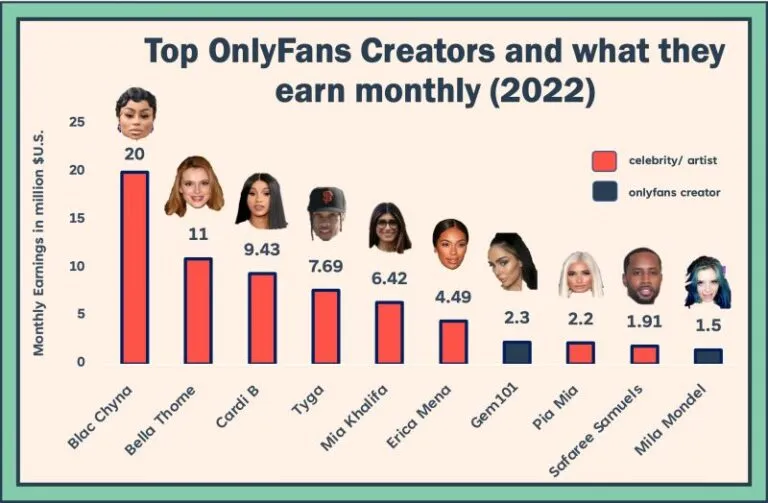
Bella Thorne OnlyFans: The 2020 Launch That Broke the Platform
She made $1 million in 24 hours and crashed OnlyFans's payment system. Then OnlyFans changed its rules.
story listicle
Top 10 OnlyFans Earners in 2026: The Real Numbers
These 10 creators each gross more than most CEOs. Here's exactly how much they make and how they got there.

cultural retrospective
Joan Cusack Returns: First Red Carpet in 11 Years
She vanished from Hollywood at the peak of her career. On May 28, Joan Cusack reappeared - and the internet collectively gasped.
cultural retrospective
Hannah Murray's Cult Story: Skins Star's Darkest Hours
She played the most fragile teenager on British TV.