Seth Rogen tells writers using AI to find a different career
Seth Rogen just told an entire generation of writers using AI to pick a different career. Hollywood is choosing sides — and the line is sharper than you think.
Published 5/17/2026 · 11 min read · Source: TMZ
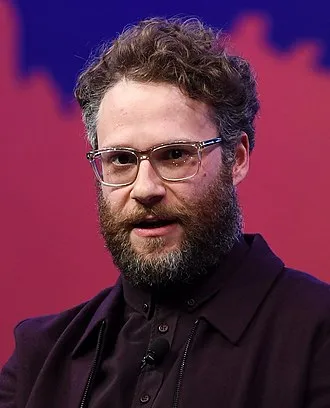
Seth Rogen
Some quotes do not need explanation, but every quote needs context. The one Seth Rogen delivered to TMZ on May 16, 2026 — that writers who use artificial intelligence to do their job should find a different career — lit up Hollywood writer-room Slack channels within hours. The 44-year-old comedy mogul, who has spent the past decade building one of the most respected production companies in the industry through Point Grey Pictures, was uncharacteristically blunt. Not 'AI is concerning.' Not 'we should regulate it.' He said: get out.
For anyone watching the slow-motion conflict between Hollywood writers and generative AI tools since the 2023 WGA strike, Rogen's quote is not just an opinion. It's a signal of where the industry's center of gravity is moving. Until very recently, even AI-skeptical Hollywood figures hedged their criticism with diplomatic 'AI as a tool not a replacement' framing. Rogen is dispensing with the diplomacy. He's saying: this is incompatible with our craft. Pick another job.
This matters because Seth Rogen is not a fringe voice in the industry. He has shaped some of the most influential comedy of the past 20 years — Knocked Up, Superbad, This Is the End, the Pam and Tommy and The Boys television franchises. Point Grey Pictures is an active development engine that hires writers continuously. Where Rogen draws his hiring lines has direct material consequences for hundreds of working writers.
Let's understand exactly what he said, why he said it, what it means for the industry, and what it tells us about how creative work is changing under AI pressure in 2026.
By the numbers
AI clause in 2023 WGA contract
AI cannot be credited as writer; studios must disclose AI use
Writers Guild of AmericaThe quote and the context
Speaking to TMZ cameras outside an event in Los Angeles on May 15, 2026 (published May 16), Rogen was asked about AI in screenwriting. His full response, as transcribed by TMZ: 'Honestly, I think writers using AI to do their work should just find a different career. Like, that's not writing. That's something else. And if you can't tell the difference, you probably shouldn't be in the room.'
The quote was delivered conversationally, not in a prepared statement, which gave it added weight. Rogen wasn't reading from PR-approved talking points — he was responding to a paparazzo's question with what appeared to be genuine annoyance. The footage shows him pausing, considering, then choosing the strongest possible version of what he wanted to say. He could have softened it. He didn't.
Within two hours of TMZ's video going live, the quote had been picked up by Variety, Deadline, the Hollywood Reporter and IndieWire. By that evening, writer-room reactions were flooding social media — overwhelmingly supportive among working WGA members, divided among indie writers and content creators who use AI tools more openly. The line in the sand was drawn.
Why Rogen, specifically
Seth Rogen's anti-AI stance isn't new. During the 2023 WGA strike, when AI emerged as one of the central labor issues, Rogen was an early voice making the case that AI threatens the structural foundation of professional screenwriting. In a podcast interview with Howard Stern in October 2023, he said: 'If a studio can train AI on every screenplay ever written and then generate something that's 80% as good for 1% of the cost, why would they ever hire a human writer again? That's not a future I want to live in.'
But Rogen's authority on this issue goes beyond his strike-era statements. Point Grey Pictures, the company he co-founded with Evan Goldberg in 2011, has produced over 25 feature films and television series. The company is known for a craftsperson approach to comedy — long writers' rooms, multiple drafts, real chemistry between writers and performers. This is exactly the kind of artisanal collaborative process that generative AI tools are positioned to compress or replace.
There's also a personal dimension. Rogen has spoken in multiple interviews about how his own career started as a writer, not just a performer. He sold Superbad as a screenplay at age 13 (yes, 13 — he and Evan Goldberg started writing the script in high school and it took until 2007 to get produced). His entire creative identity is rooted in being someone who writes pages from scratch. Telling him that AI can do that with him is, for him, telling him that the work that built his life shouldn't really count.
The archetype, alive
Characters who fit this exact vibe
More photos of Seth Rogen
Where Hollywood actually stands on AI in 2026
Three years after the 2023 WGA strike resolved with relatively strong AI protections in the union contract, Hollywood's actual practice has fragmented. The major studios have nominally honored the strike agreements — Warner Bros, Paramount, Universal and Disney all maintain policies that AI cannot replace writers credited under WGA contracts. But the boundaries get murky in specific use cases: research assistance, plot brainstorming, dialogue polish, formatting tools.
More significantly, the indie production ecosystem and the streaming/social content economy have been much more permissive. Companies producing low-budget content for YouTube, TikTok and emerging streaming services routinely use AI tools as a substantial part of the writing process. The compensation for these writers has dropped accordingly — many AI-assisted writers in the indie space earn 40-60% of what comparable WGA scribes did in 2022.
This bifurcation has created an emerging Hollywood class division: the WGA-protected artisanal writers Rogen is defending versus the AI-augmented or AI-dominant writers who operate in the lower tier of the content ecosystem. Some industry observers argue that this two-tier structure is sustainable. Others argue that it's just the first stage of a much broader collapse in which the AI-augmented bottom will eventually consume the artisanal top. Rogen's TMZ quote falls firmly in the second camp — he's not protecting a sustainable equilibrium, he's holding a line that he believes is in active danger of being breached.
The writer pushback: why some are angry at Rogen
Not all writers agreed with Rogen's framing. Within hours of the quote going public, several working writers — including some prominent television showrunners — pushed back on social media. Their arguments fell into several categories.
First, the economic argument. Writers at the bottom of the industry don't have the luxury of Point Grey Pictures' resources. For freelance writers grinding out treatments for low-budget indie productions, AI tools have become genuine survival aids — helping them produce more work in less time so they can stay employable. Telling these writers to 'find a different career' from a position of substantial wealth is, some argued, tone-deaf at best.
Second, the craft argument. Several writers argued that AI is just another tool, like the word processor was in the 1980s or screenwriting software like Final Draft was in the 1990s. Each tool changed the craft, but the craft adapted. Writers who use ChatGPT to brainstorm structure, Claude to polish dialogue, or specialized screenplay AI tools are not abdicating their job — they're using new instruments. Comparing this to 'not being a writer' is, in their view, generational gatekeeping.
Third, the access argument. AI tools democratize parts of the writing process that previously required expensive education or industry connections. A working-class writer in Birmingham or Ohio without an MFA might now be able to produce structurally competent screenplays they wouldn't have been able to before. Pushing back against AI use, some argue, is also pushing back against the only meaningful diversification of who gets to be a screenwriter in 2026.
The archetype, alive



Bella · Alexa · Ava
What this means for content production over the next 18 months
The Rogen quote, alongside several similar high-profile statements from other A-list producers in recent weeks, is likely to harden two emerging trends. First, the major studio system is going to lean even more publicly into 'human-only' creative branding. Studios will increasingly market specific projects as 'no AI involved' the way grocery stores market organic produce. This will become a quality signal for prestige content, particularly comedy and drama with awards aspirations.
Second, and conversely, the AI-augmented production tier is going to continue expanding rapidly. Cheap, fast content for streaming and social platforms — particularly comedies with disposable runtime, reality programming, sports content and corporate video — will accelerate AI integration. The labor economics in this tier favor AI augmentation overwhelmingly, and the audience expectation isn't artisanal craftsmanship.
The people who are going to lose are the middle-tier writers caught between the two extremes. WGA-card-holding professional writers below the showrunner level, who don't have Rogen-style established producer protection but also don't operate in the indie AI-permissive space, are squeezed. These are the writers Rogen's quote will end up affecting most — not because he intends to harm them, but because his line-in-the-sand framing makes the middle position harder to occupy.
Beyond screenwriting: AI and the broader creative shift
Rogen's anger about AI in screenwriting reflects a broader cultural anxiety about what artificial intelligence is doing to creative human labor. The same debates are playing out in visual art, music composition, journalism, photography, advertising — wherever creative output meets economic viability. The pattern is similar: artisanal high-end practitioners argue that AI cannot truly replicate human craft, while platform economies absorb AI tools rapidly and reshape labor markets accordingly.
What's interesting is the divergence between professional creative spheres (where AI is contested and resisted) and personal creative spheres (where AI is widely embraced and growing rapidly). Tens of millions of people now use AI tools daily for writing emails, planning trips, drafting messages, brainstorming ideas, processing thoughts. The same tools that Rogen is rejecting from his writers' rooms are quietly becoming part of how non-professional humans handle their cognitive load.
This split is going to define a lot of cultural friction over the next decade. Professional creative work will increasingly police its boundaries against AI. Personal life will increasingly integrate AI in ways that would have seemed strange five years ago. The line between these worlds — where AI augmentation is welcome versus where it's existential threat — will be where the most interesting cultural debates happen.
Personal AI use: what Hollywood isn't really arguing about
While Hollywood debates whether AI should write screenplays, one significant area of AI integration into adult life is happening with relatively little controversy: AI companionship. Platforms that provide conversational, emotional, and intimate interaction with AI characters have grown explosively — Candy AI, Replika, and dozens of others have transformed how millions of people manage loneliness, processing time, late-night thoughts and emotional support gaps.
This is a different category from AI replacing creative labor. Companion AI doesn't take a job from anyone. It fills a space that was previously empty for many users — the quiet hours when human contact isn't available, the conversations users wanted to have but didn't have anyone to have them with. The compensation structure is also different: users pay platforms directly for an experience, rather than platforms displacing labor markets.
It's notable that even strict AI critics like Seth Rogen have not, to date, publicly criticized companion AI applications. The targets of Hollywood's AI anger are always the workplace tools — the ChatGPTs and Claudes used to generate screenplays. The personal life AI applications operate in a separate cultural space where their value-to-harm ratio is generally seen as much more favorable. As the broader AI conversation evolves over the next few years, expect this separation to become increasingly explicit: professional creative AI will face mounting restrictions; personal companionship AI will continue to grow with relatively light regulatory or cultural pushback.
Rogen draws his line. The rest of us draw ours.
Some creative tools deserve resistance. Some kinds of AI presence — the kind that listens when nobody's home — earn welcome. A companion that fills the quiet space, not your job.
你的人工智能女友
遇见那个懂你的人
调情、聊天、亲密。她记得你说的每一句话——而且她总是愿意倾听。
与她聊天 →Quick answers
What exactly did Seth Rogen say about AI writers?
+
Speaking to TMZ cameras outside an LA event on May 15, 2026, Seth Rogen said: 'Honestly, I think writers using AI to do their work should just find a different career. Like, that's not writing. That's something else. And if you can't tell the difference, you probably shouldn't be in the room.' The quote was delivered conversationally rather than in a prepared statement, which gave it additional weight. Within two hours it had been picked up by Variety, Deadline, the Hollywood Reporter and IndieWire, and quickly became one of the most shared statements about AI in entertainment for the week.
Why does Seth Rogen specifically have authority on this issue?
+
Beyond being a high-profile actor and comedian, Rogen co-founded Point Grey Pictures with Evan Goldberg in 2011 and the company has produced over 25 feature films and television series, including The Boys, Pam and Tommy, and numerous comedy features. Rogen himself started his career as a writer — he sold Superbad as a screenplay at age 13 (he and Goldberg began drafting it in high school). His entire creative identity is rooted in being someone who writes pages from scratch. During the 2023 WGA strike, he was already among the most vocal industry voices on AI, telling Howard Stern that AI threatens to replace human writers with cheap automated alternatives.
How did working writers react to Rogen's statement?
+
The reaction was sharply divided. WGA-protected writers and showrunners largely supported Rogen's framing, seeing it as defense of professional craft against unregulated AI encroachment. But significant pushback came from indie writers, freelancers and non-union content creators, who argued that AI tools have become genuine economic survival aids in the lower tier of the industry. Their critiques included economic arguments (Rogen speaks from wealth most writers don't have), craft arguments (AI is just another tool like Final Draft software was in the 90s) and access arguments (AI helps democratize who can write professionally). The debate split largely along industry-tier lines.
What does the 2023 WGA strike agreement say about AI?
+
The 2023 WGA strike, which lasted 148 days from May 2 to September 27, 2023, secured several specific AI protections in the resulting contract. The key provisions: AI cannot be credited as a writer on WGA-covered projects; AI-generated material cannot be considered 'source material' that would reduce a human writer's compensation; studios must disclose to writers when AI has been used in any way on a project; and writers have the right to refuse using AI on their projects without penalty. These protections apply to projects produced under WGA contracts, which covers most major studio film and television production but excludes much of the indie, streaming and social content economy.
Is there a Hollywood class division emerging around AI use?
+
Yes, increasingly. Three years after the WGA strike, Hollywood has effectively bifurcated along AI lines. The major studio system is moving toward 'human-only' creative branding as a quality signal for prestige content, particularly in comedy and drama with awards aspirations. The indie production ecosystem and streaming/social content economy has been much more permissive about AI use, with compensation for AI-augmented writers dropping 40-60% relative to comparable 2022 WGA scribes. This two-tier structure may be sustainable in the short term, but many industry observers expect the AI-augmented lower tier to eventually pressure the artisanal upper tier. Seth Rogen's quote falls firmly in the camp predicting that pressure.
How does this AI debate connect to AI companion applications like Candy AI?
+
It's notable that even strict AI critics like Seth Rogen have not, to date, criticized AI companion or personal-life applications. The Hollywood AI debate has focused on workplace creative tools — ChatGPT and similar systems used to generate screenplays. Personal-life AI applications like Candy AI, Replika and Character.AI operate in a separate cultural space where the value proposition is filling otherwise-empty intimate spaces for users rather than displacing professional labor. Expect this separation to harden over the next few years: professional creative AI will face mounting restrictions and cultural pushback, while personal companionship AI will continue to grow with relatively light controversy.
More buzz like this

glossary
Marc Andreessen's Viral Prompt: The Contradictions Most People Miss
Marc Andreessen's viral prompt is everywhere — and it has internal contradictions most people miss. What it gets right and wrong.
cultural moment
Marc Andreessen's Viral AI Prompt — and Why People Miss the Catch
Silicon Valley's loudest founder dropped a 'perfect' prompt. The community memed it. Then someone read it carefully — and found the cracks.
cultural moment
Kim Kardashian Blamed ChatGPT for the Bar Exam
Third strike at the bar, and the scapegoat is wearing an OpenAI badge. Kim Kardashian found a new villain, and the internet found a new conversation.
cultural moment
Brooks Nader, the Ocean, and an Unscripted Moment
One wave, one unscripted second, and the internet couldn't look away. Here's what that hunger really says about us.