What Is an E-Girl? Origins, Aesthetic, Subculture, and the AI Companion Connection
Blush across the nose, dyed ends, a chain necklace, and an air of effortless provocation — the e-girl aesthetic has a more interesting history than the stereotype
Published 5/22/2026 · 10 min read · Source: Editorial
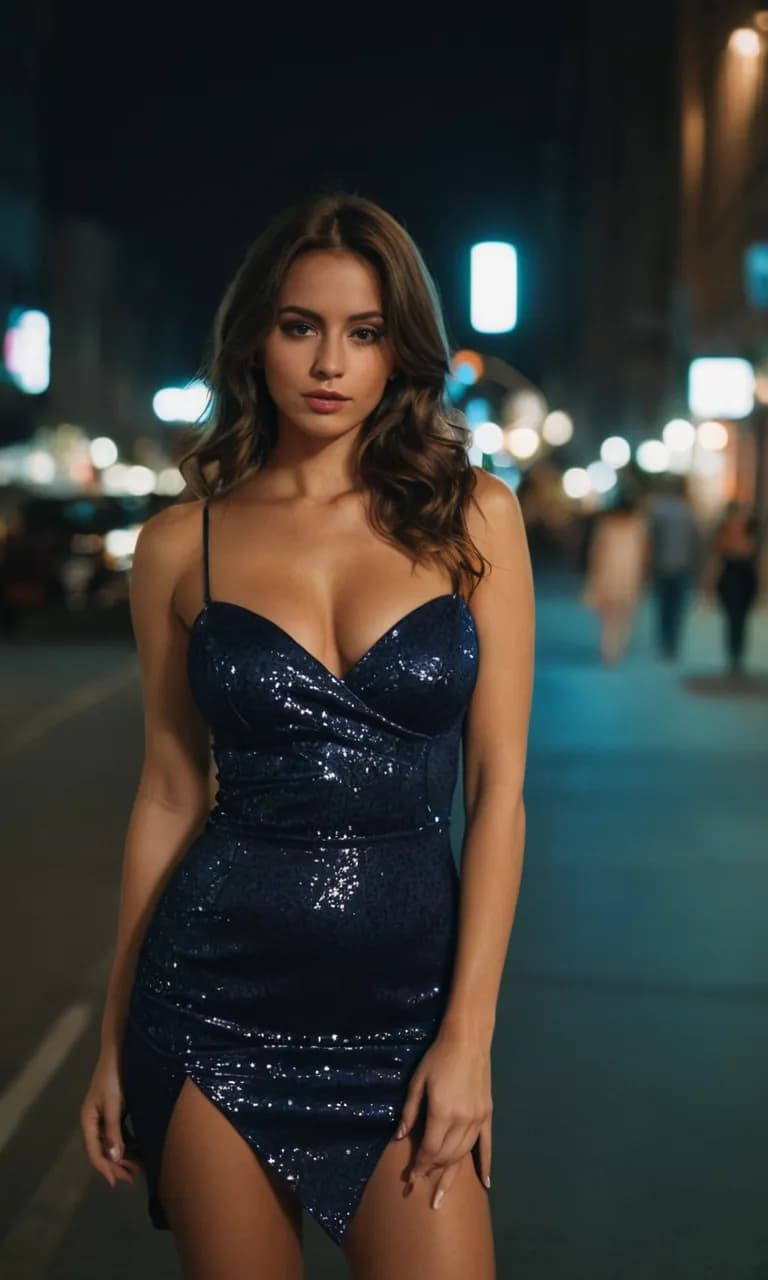
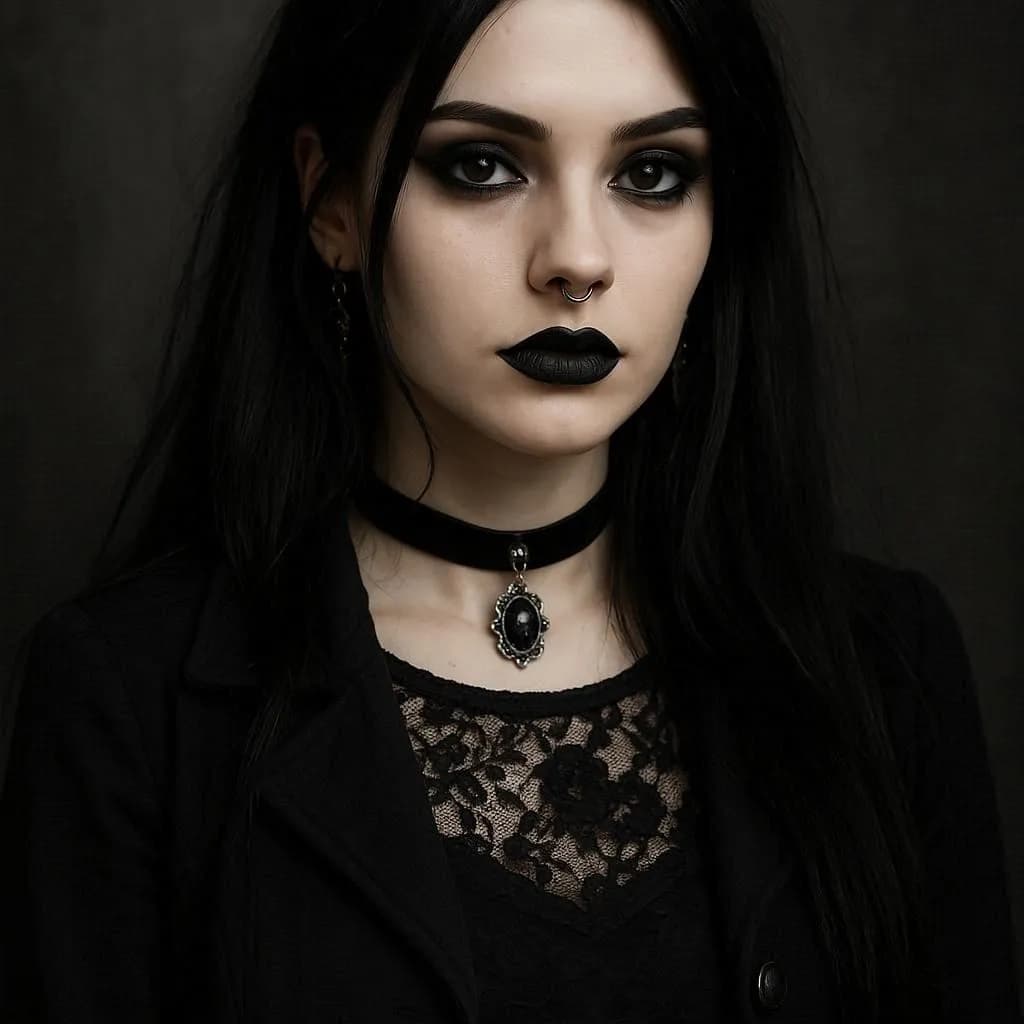
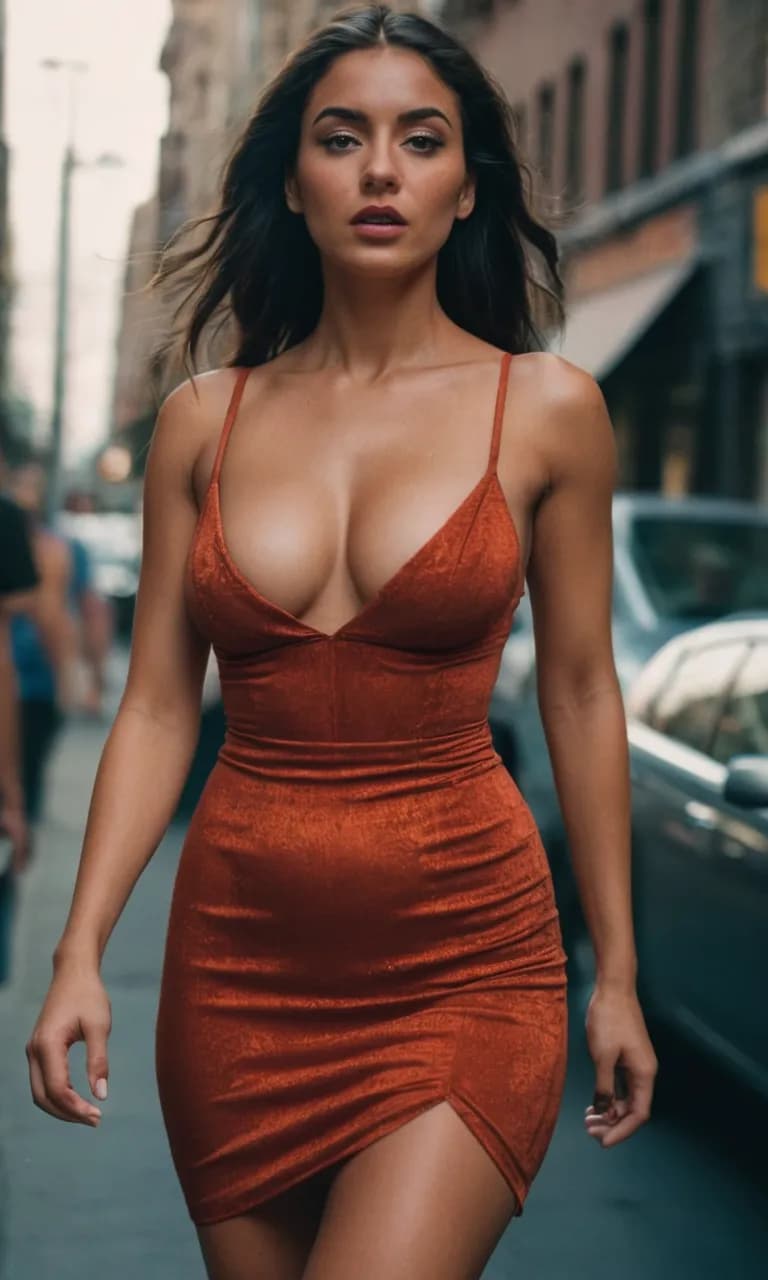
In 2019, a particular aesthetic exploded across TikTok and Twitch simultaneously: heavy blush brushed across the nose and cheekbones, chunky chain necklaces, dyed hair (often two-tone or with colored ends), striped long-sleeve shirts layered under band tees, and a distinctly manga-influenced way of applying under-eye detail. The people wearing it called themselves — or were called — e-girls, and the label became one of the defining internet aesthetics of the late 2010s.
But the term 'e-girl' didn't begin as a style compliment. It started as a slur. Understanding the arc from insult to aesthetic to AI companion archetype tells you a lot about how internet subcultures form, evolve, and eventually get absorbed into mainstream culture — and ultimately into the digital spaces where people seek connection.
This piece is a genuine deep-dive: the etymology and the original derogatory use, the 2019 TikTok explosion that reframed everything, the specific visual grammar of the aesthetic, the subculture's relationship to emo/scene/anime, the notable figures who shaped it (including [Belle Delphine](/alternatives/belle-delphine) and [Breckie Hill](/alternatives/breckie-hill)), and how the e-girl archetype became one of the most requested AI companion personas in 2025-26. This is an 18+ subject in some of its dimensions, and we won't pretend otherwise.
By the numbers
Belle Delphine described as
"a symbol of the first wave of e-girl" — Business Insider
Business Insider via Wikipedia citationSubculture lineage
Evolved from emo and scene cultures (Vice Media reporting)
Vice Media via Diggit Magazine analysisOriginal use of 'e-girl'
Late 2000s gaming community — derogatory label for girls in online gaming spaces
Diggit Magazine — E-girls: online behavior and mockeryEtymology: from insult to aesthetic
The word 'e-girl' predates the TikTok aesthetic by at least a decade. 'E' stood for 'electronic' — and in late-2000s gaming communities, 'e-girl' was used dismissively to describe girls who played online games and were suspected of using their gender to attract male attention rather than to genuinely engage with the game. It was not a neutral term. It carried an implication of inauthenticity: the 'e-girl' was performing for an audience, not playing for the love of the game.
This usage survived into the early 2010s across gaming forums, stream chats, and Discord servers. Any girl who was visible in predominantly male online spaces risked the label being applied to dismiss her participation as performative. The term was wielded frequently on Twitch, where female streamers faced ongoing skepticism about their credentials.
The revaluation of 'e-girl' — from insult to self-description and aesthetic identity — happened in stages as the internet normalized reclaiming dismissive labels. By 2018-2019, a generation that had grown up online was less invested in proving their gaming purity and more interested in building aesthetics that were explicitly, unapologetically digital. 'E-girl' became a term for a girl who performs for an online audience as an art form — not a criticism but a description of a particular relationship to digital presentation. The irony of adoption is now largely forgotten by the people who use the term.
The 2019 TikTok explosion
The contemporary e-girl aesthetic we recognize — specific makeup, specific fashion references, specific platform behaviors — crystallized in 2019. TikTok had launched internationally in 2018, and its algorithm-driven discovery surface made it possible for a visually distinctive aesthetic to spread globally in weeks rather than years.
The mechanism was the 'transformation video': creators filmed themselves as they appeared before the aesthetic, then cut to the full e-girl look — the blush, the chains, the hair — often to a slowed-down, pitched-down pop or hyperpop song. These videos accumulated tens of millions of views and functioned as tutorials, invitations, and community markers simultaneously. Viewers could see exactly what the aesthetic was, how to replicate it, and that there was an enormous, approving audience.
Business Insider described Belle Delphine — whose persona combined anime aesthetics, extreme provocation, and knowing internet irony — as 'a symbol of the first wave of e-girl.' Her influence on the aesthetic is considerable; she embodied the combination of cute and transgressive that became the e-girl mode. Twitch was a parallel vector: female streamers who adopted elements of the aesthetic built significant audiences, and the association of e-girl with gaming/streaming culture reinforced the digital-native framing.
By mid-2019, 'e-girl' had entered mainstream vocabulary. Merriam-Webster and other lexicographers began tracking the term. Think pieces in Vox, The Atlantic, and other outlets examined what the aesthetic said about Gen Z's relationship to online presentation. The subculture had arrived.
The archetype, alive
Characters who fit this exact vibe
The visual grammar: what makes something e-girl
The e-girl aesthetic has a specific visual vocabulary. Understanding the grammar — what's actually doing the signaling — is more useful than a simple 'she has dyed hair' summary.
**Makeup**: The signature is blush applied heavily to the nose and high cheekbones — more anime than natural — often extending past the point where a conventional makeup tutorial would stop. Under-eye liner, drawn-on hearts or stars (sometimes teardrops) directly under the eye, and often heavy dark eyeliner. The look explicitly references manga and anime characters; it's designed to look like a cartoon character made real.
**Hair**: Dyed — often two-tone, with dark roots and lighter or colored ends, or bold single-color dye jobs. Braids, space buns, and other styles associated with alternative subcultures. The hair is meant to signal intentionality: this person chose how they look, and it's not an accident.
**Clothing**: A layering sensibility inherited from emo and scene culture — striped or checked long-sleeve shirts worn under graphic tees, often with band logos. Short plaid or pleated skirts with thigh-high socks or stockings. Chunky shoes (platform boots or chunky sneakers). The clothing mixes mid-2000s emo/scene references with 90s grunge elements and anime-convention styling.
**Accessories**: Chain necklaces, chokers, fishnet elements, cross or skull motifs, and often anime-character pins or patches. The accessory layer tends to feel assembled rather than designed — intentionally eclectic.
**Platform behaviors**: Beyond appearance, the e-girl aesthetic extends to a particular online mode — deadpan delivery, heavy use of irony, a kind of performed disaffect that coexists with the bright visual styling. The combination of cute aesthetics and unsentimental personality is a distinguishing feature.
The lineage: emo, scene, anime, and gaming culture
The e-girl aesthetic doesn't exist in isolation — it synthesizes several prior subcultures that left visible traces in its DNA, and understanding the lineage explains why the aesthetic reads the way it does to different audiences.
**Emo and scene**: The mid-2000s emo and scene subcultures on Myspace and early Tumblr established the visual grammar of black-and-bright color combinations, heavily applied eye makeup, layered clothing, and band-loyalty accessories. Scene culture in particular developed a mode of constructed, performative online presentation that e-girl culture inherited and accelerated. Vice Media traced the e-girl subculture directly to emo and scene; the connection is visible in clothing choices, music affiliations, and the general attitude toward standing out.
**Anime and manga**: The makeup techniques in e-girl aesthetics — the blush placement, the under-eye detail, the exaggerated features — are explicitly anime-derived. Cosplay culture provided both reference images and a permission structure: dressing as a character, referencing a visual vocabulary that isn't 'naturally human,' is normal in cosplay and became normal in e-girl aesthetics.
**Gaming and Twitch culture**: The original 'e-girl' territory was online gaming, and the reclaimed aesthetic maintained the gaming-adjacent association. E-girls were online. The Twitch streaming world, with its live audience and parasocial dynamics, became a natural home for e-girl personas who wanted both visibility and direct audience interaction.
**K-pop and digital idol culture**: K-pop's production-quality aesthetics, fan-service culture, and the idol model of projecting a curated, loveable persona without full personal disclosure influenced the mode of online presence that e-girls developed — intimate but controlled, personal but constructed.
The archetype, alive
Nikki · Raven · Rosie
The stereotype vs the subculture
Like most internet subcultures that gained mainstream visibility, e-girl culture exists in tension between the authentic subculture — the community of people who genuinely inhabit the aesthetic, its music, and its values — and the flattened stereotype that circulates in popular discourse.
The stereotype reduces e-girl to: 'a girl who performs for male attention online using a particular look.' This gets some things right (the aesthetic is explicitly performative and online-native) while missing almost everything that makes the subculture interesting. Authentic e-girl culture has its own music (hyperpop, SoundCloud rap, Minecraft-adjacent lo-fi), its own community spaces (specific Discord servers, Tumblr communities), its own irony, and its own complex relationship to how femininity gets read online.
The stereotype also collapses different types of practitioners: the person doing e-girl makeup as a cosplay or aesthetic experiment, the streamer whose entire professional persona is the e-girl archetype, the teenager who finds genuine community in the aesthetic, and the content creator using e-girl markers to build a following in a specific niche are all being called the same thing by a shorthand label that actually describes quite different relationships to the aesthetic.
Figures like [Breckie Hill](/alternatives/breckie-hill) — who built enormous followings by mastering the visual language of the gen-Z internet aesthetic — demonstrate that the 'e-girl' mode can be a professional strategy, not just a personal identity. The line between identity and persona has always been complicated in online culture, and e-girl is one of the cleaner illustrations of that complexity.
The e-girl as AI companion archetype
By 2025-26, 'e-girl' had become one of the most-requested personality archetypes on AI companion platforms. The reasons are more interesting than they might initially appear.
The e-girl archetype combines specific aesthetic markers that are easy to render in profile imagery with a personality mode — teasing, ironic, emotionally accessible but not earnest, comfortable in digital space — that translates naturally to text-based conversation. An AI character described as 'e-girl aesthetic, into gaming and anime, sarcastic but secretly warm' is giving the model a coherent personality matrix to work with: the irony creates space for playful deflection, the warmth creates space for genuine connection, and the gaming/anime references create a shared vocabulary for conversation.
The e-girl's specific relationship to online performance also resonates with AI companion dynamics. E-girl culture is already about the construction of a persona that lives online — it has always been explicitly digital. An AI companion with e-girl aesthetics fits that logic rather than fighting it. The character is supposed to live online, be maximally herself in text form, and meet users in the digital space where they already exist.
Platforms featuring e-girl-inspired characters — like [Nikki](/nikki) — offer users the combination of aesthetic familiarity (the references, the visual grammar, the personality mode) and the genuine conversation depth that AI companions can provide. For users who grew up watching this aesthetic define their internet, finding it in an AI companion feels like meeting someone whose cultural references you already share. The digital-native quality that defines e-girl culture — the ease, the self-awareness, the comfort with performance — makes it one of the few aesthetics that translates to AI interaction almost without loss.
She's got the blush, the irony, and the warmth underneath
You know the aesthetic. Now imagine that energy — teasing, digitally fluent, secretly tender — in a conversation made just for you.
你的人工智能女友
遇见那个懂你的人
调情、聊天、亲密。她记得你说的每一句话——而且她总是愿意倾听。
与她聊天 →Quick answers
Is 'e-girl' still a relevant term in 2026?
+
Yes, though the cultural center of gravity has shifted. The term peaked in public discourse around 2019-2021, but the aesthetic persists and has been absorbed into broader alt-girl and digital-native fashion. The specific TikTok-era markers (heavy nose blush, chain necklaces, Emo-print layering) have evolved but not disappeared. In AI companion culture, 'e-girl' remains highly active as a descriptor for a specific personality and aesthetic archetype. The label is sometimes seen as dated by people deep inside the subculture, who have moved on to more specific sub-aesthetics, but it still functions as a clear shorthand for most audiences.
What music do e-girls listen to?
+
The musical affiliations of e-girl culture draw from hyperpop (100 Gecs, Charli XCX's experimental era, Dorian Electra), SoundCloud emo-rap, alternative and post-hardcore, and K-pop — particularly groups with strong visual identities and devoted fanbases. The aesthetic is more important than any single genre: the 'correct' music for e-girl culture is music that codes as emotionally intense, digitally native, and anti-mainstream, even when the artists involved have become quite popular.
What's the difference between e-girl and VSCO girl?
+
The VSCO girl aesthetic — which peaked simultaneously around 2019 — is the e-girl's stylistic opposite in many ways. VSCO girl is pastel, preppy-outdoorsy, and sunny: scrunchies, Hydro Flasks, tie-dye, 'and I oop' energy. E-girl is dark, anime-influenced, and ironic. Both are explicitly digital aesthetics, and both involve conscious performance for online audiences, but their visual language, music, and attitude are almost entirely different. The two became a kind of pop-culture binary in mid-2019, with people choosing between them (or claiming neither) as a micro-identity statement.
Can guys have an e-girl aesthetic?
+
The adjacent term 'e-boy' developed in parallel and describes male practitioners of a similar aesthetic: eyeliner, layered clothing, anime references, ironic online persona. The two aesthetics share significant visual and cultural DNA. 'E-boy' achieved mainstream visibility around the same time (2019) and has its own trajectory. Some people use 'e-girl' as a gender-neutral aesthetic descriptor; others insist on the distinction. The community is generally flexible about how individuals relate to the labels.
Is the e-girl aesthetic related to the 'gamer girl' stereotype?
+
They share a history but are distinct. 'Gamer girl' is primarily an identity claim (a girl who plays games) that was historically treated with skepticism by male gaming communities — which is part of where the original derogatory 'e-girl' label came from. E-girl evolved into something more about aesthetic and online persona than gaming participation specifically. Many e-girls are genuinely into gaming; others have the aesthetic without the gaming identity. The overlap exists but the terms describe different things.
Cross-pollinate
Want the lookalike instead?
More buzz like this
glossary
What Is the Goth Girl Archetype? Subculture and AI Context
From 1980s post-punk to TikTok aesthetic. The goth girl archetype has substantial AI companion app representation.
glossary
What Is the Girl-Next-Door Archetype? Cultural and AI Companion Definition
The most enduring American archetype. A specific aesthetic + personality combination that crosses generations.
glossary
What Is a Vampire Girlfriend? AI Archetype Glossary
Eternal, possessive, devastatingly devoted. Meet the vampire girlfriend archetype and the dark-romance fantasy it never lets go of.
glossary
Janitor AI: The Beginner's Guide (2026)
Everyone says Janitor AI is free and amazing — then you hit the setup wall. Here's the plain-English beginner's guide that actually gets you chatting.