AI Cosplay on TikTok in May 2026 — The Trend, the Tools, and What's Next
AI cosplay is everywhere on TikTok in May 2026. The tools, the creators, why it works — without the hype.
Published 5/8/2026 · 7 min read · Source: Reddit r/aigirls

AI Cosplay Is Eating TikTok in May 2026 — Why
Open TikTok any day in early May 2026 and you'll see them: AI-generated cosplay videos, frequently labeled with creator handles like @PlutosEcho.AIVisuals, racking up millions of views. The aesthetic is consistent — anime-adjacent or comic-character-adjacent women in elaborate costumes, set to slowed-and-reverbed soundtracks, with motion that has the slightly-too-smooth quality of generative video. Reddit communities like r/aiArt and r/aigirls are tracking the trend daily, with new accounts blowing up faster than the algorithm can flag them.
The context: between late 2025 and early 2026, generative video tools made their final leap. LTX 2.3 (the distilled version of Lightricks' video model that runs on consumer GPUs), Runway Gen-4, Pika 2.0, and several open-source alternatives crossed the threshold where a single creator with a mid-range graphics card and an afternoon could produce a 30-second video that looked credibly real to a casual viewer. The economics shifted overnight. What used to require a film crew, a costume designer, and a studio now requires a prompt and patience.
This article maps the trend honestly. Who's making this content, what tools they're using, who's watching, and why traditional human cosplayers are watching with growing concern. We're not going to celebrate or condemn — we're going to describe what's happening so you can form your own view. Because this trend isn't going away in 2026; it's accelerating.
By the numbers
LTX 2.3 distilled hardware
RTX 4090 or comparable
r/StableDiffusion benchmarksGeneration time per clip
2-3 minutes for 5-10s output
User benchmarksMajor video model releases late 2025/early 2026
LTX 2.3, Runway Gen-4, Pika 2.0
Industry trackingTikTok AI labeling requirement
Active 2024+, inconsistent enforcement
TikTok policy docsThe tools powering the May 2026 wave
LTX 2.3 v1.1 distilled is the workhorse for many creators in May 2026. The 'distilled' version means the model has been compressed to run efficiently on consumer hardware — a single RTX 4090 (or better) can produce 5-10 second clips in roughly 2-3 minutes. The quality has gotten good enough that motion artifacts (the giveaway of older generative video) are becoming subtle. A Reddit thread on r/StableDiffusion in May 2026 demonstrating LTX 2.3 distilled output got 695 upvotes specifically because the demo was 'pretty decent for creating UGC content or short TikTok vlog.'
For static images that get animated, creators use Stable Diffusion XL with cosplay-specific LoRAs (low-rank adapters that bias the model toward particular aesthetics). The cosplay LoRA libraries on CivitAI proliferated through late 2025 and are now stable, well-tagged, and regularly updated. A creator picks an aesthetic (cyberpunk, gothic, fantasy), drops in the right LoRA, generates the base image, then animates it through one of the video models.
Audio is the easier part. TikTok's licensing of pre-existing audio means most creators don't need to generate sound — they pick a trending audio, sync the video to its key moments, and let the algorithm do the rest. The result is a production pipeline where a single person can publish 5-10 polished videos per week, far more than any human cosplayer can match.
Who's actually creating this content
The creator base is more varied than the 'lone basement guy' stereotype. Three rough archetypes emerge from looking at top performing accounts in early May 2026.
First archetype: technical hobbyists who came to AI video from the Stable Diffusion community. They post primarily for craft pride, monetize secondarily through Patreon and merch, and discuss their workflows openly in the AI community. These creators often have 20-50K TikTok followers but very high engagement rates because their craft is genuinely impressive within the AI niche.
Second archetype: opportunistic content creators who pivoted from human-fronted content (cosplay, modeling, OnlyFans) to AI-generated content because the production economics are better. These accounts often have 100K+ followers from prior projects and now use AI to scale their output dramatically. The economics are striking: a creator who previously needed a full day to produce one cosplay photoshoot can now produce equivalent content in an hour.
Third archetype: pure platform operators who treat AI cosplay as content arbitrage. Mass-produce videos, route traffic to monetization funnels (typically subscription content services or affiliate links to AI companion apps). These operators are running this as a business, not a creative practice. Their accounts proliferate quickly, get banned periodically, and respawn with new handles.
The archetype, alive
Characters who fit this exact vibe
More photos of AI Cosplay Is Eating TikTok in May 2026 — Why
Why traditional cosplayers are worried
The cosplay community spent 20 years building infrastructure: conventions, photographers, costume craft, the social capital of physical presence at events. AI cosplay shortcuts all of that. A single AI creator can produce more 'cosplay content' in a week than a human cosplayer produces in a year, with zero costume cost, zero travel, zero physical labor.
The concern isn't fundamentally aesthetic. Human cosplayers acknowledge the AI versions can look impressive. The concern is economic: the audience attention that used to flow to human creators (and the sponsorships, gigs, and event invitations that follow that attention) is being absorbed by AI content. The pie isn't growing fast enough to compensate.
A secondary concern is identity. Human cosplayers often build their personas around specific characters they portray repeatedly. When AI creators can generate any character, the relationship between creator and character changes. The audience's relationship with a specific cosplayer (the person who's *the* Tifa cosplayer, or *the* Wonder Woman cosplayer) is undermined by content that can produce any character on demand. This is a real loss for the genre.
What viewers should know about engagement
If you're consuming AI cosplay content casually on TikTok, three things are worth knowing. First, the production behind these videos is more impressive than the marketing usually conveys, but the creators are real people doing real work. The fact that the output is AI-generated doesn't mean nobody crafted it — prompt engineering, LoRA selection, audio sync, video editing all involve genuine creative labor.
Second, many of these accounts route to monetization funnels — typically AI companion apps, custom content subscriptions, or affiliate links. If you find yourself clicking through to specific apps, that's by design. Whether the apps deliver value is independent of whether the cosplay content was good.
Third, the trend is ethically complex. Some AI cosplay creators commission real cosplayers' likenesses (with consent and royalties). Others train models on existing cosplay photos without consent. Distinguishing the two from the consumer side is nearly impossible. If you care about supporting human cosplayers, deliberately seeking out their accounts (rather than letting the algorithm feed you AI-generated content) is the practical move.
The archetype, alive

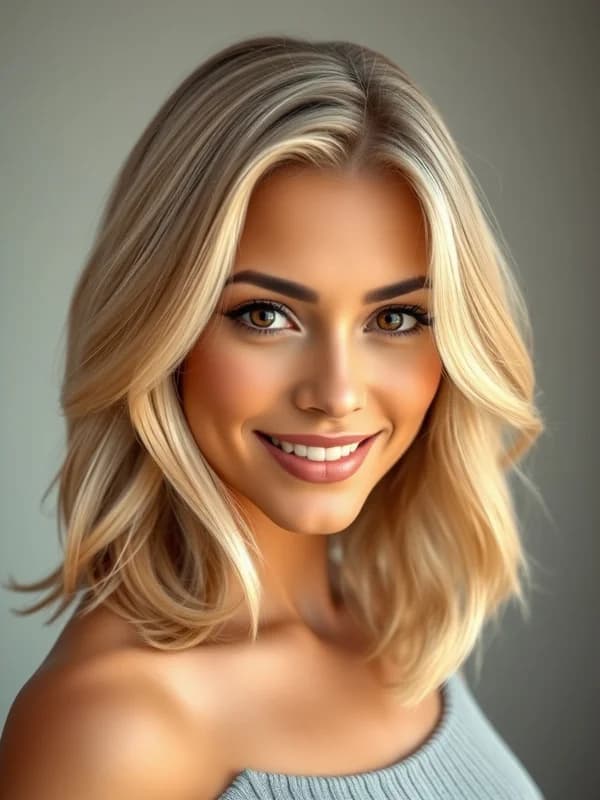
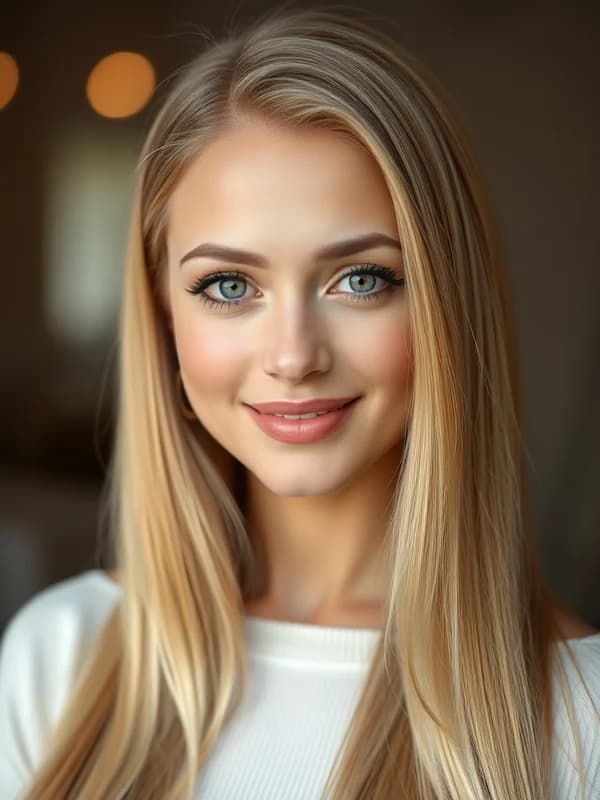
Sofia · Vera · Ida
Where this trend goes through the rest of 2026
Three forecasts seem reasonable based on the May 2026 data. First, the volume of AI cosplay content will keep growing — production cost approaches zero, the algorithms reward novelty, and new tools keep dropping. By late 2026, AI-generated cosplay content will likely outnumber human-cosplay content on TikTok by a wide margin.
Second, platforms will introduce friction. TikTok already has labeling requirements for AI-generated content that are inconsistently enforced. Expect more aggressive enforcement, possibly tiered visibility for unlabeled AI content, and new monetization rules that distinguish AI creators from human creators. Whether this slows the trend meaningfully or just creates better disguises is unclear.
Third, the most successful AI cosplay creators will hybridize. They'll add real-time elements — TikTok lives where they generate content interactively with viewer prompts, custom commissioned content for paying fans, real human-AI collaborations where a human cosplayer and an AI version of the same character interact. The hybrid model will likely dominate by 2027, leaving pure AI-only and pure human-only as smaller niches.
For consumers and creators in the AI companion space, the trend has direct implications. The visual stylings, persona archetypes, and engagement patterns being normalized in AI cosplay are training audiences for AI companion apps too. The two industries are increasingly cross-pollinating. Watching the AI cosplay trend evolve is, in effect, watching a leading indicator for what AI companions will look and feel like over the next 18 months.
From the screen to your conversations
If AI cosplay aesthetics resonate with you, Candy.AI lets you bring those personas into actual conversations — not just videos.
你的人工智能女友
遇见那个懂你的人
调情、聊天、亲密。她记得你说的每一句话——而且她总是愿意倾听。
与她聊天 →Quick answers
What tools are creators actually using for AI cosplay?
+
Most workflows combine Stable Diffusion XL (with cosplay-specific LoRAs from CivitAI) for base images, then animate via LTX 2.3 distilled, Runway Gen-4, or Pika 2.0. Audio is usually a TikTok trending track synced to key motion moments. The whole pipeline is reachable on a single RTX 4090-class GPU.
Is AI cosplay legal?
+
Mostly, with caveats. Generating original characters or generic archetypes is unambiguously legal. Generating recognizable likenesses of real people without consent raises right-of-publicity concerns. Generating copyrighted characters (specific anime, video game, or comic IP) lives in a gray area where most platforms tolerate fan usage but legal exposure exists if rights holders act.
How do I tell AI-generated cosplay from human cosplay?
+
By 2026, this is harder than it was in 2024. Cues that still help: motion that's slightly too smooth or has subtle morphing, lighting that's perfect across multiple frames in a way real photography rarely achieves, hands or fingers that subtly distort during movement, and accounts that produce more content than any human creator could realistically generate.
Are AI cosplayers replacing human cosplayers?
+
Partially. They're absorbing audience attention faster than the platform can grow. Human cosplayers who lean into hybrid approaches (using AI tools to enhance their own physical work, collaborating with AI creators) are adapting better than those competing head-on. The full effect on convention attendance, photo gigs, and sponsorships will take through 2027 to assess.
Why do these accounts keep linking to AI girlfriend apps?
+
Because affiliate funnels work. AI cosplay viewers convert relatively well to AI companion apps because the visual aesthetic and emotional appeal overlap. The arbitrage is straightforward: free attention from algorithm + paid attention via affiliate link = revenue. Most major AI companion apps have aggressive affiliate programs that make this funnel attractive.
More buzz like this

app review
LTX 2.3 Distilled Review: AI Video on a Single GPU
AI video on a single consumer GPU. We tested LTX 2.3 distilled — what it can do, what still breaks, who should use it.
cultural moment
AI Companionship in 2026: The Quiet Cultural Shift
AI companions stopped being a punchline this year. Sixty million users later, here's what changed.
glossary
What Is a Character Card? The 2026 Glossary
Behind every great AI companion is a 5-50KB JSON file most people have never seen. Here's what it does.
cultural moment
Brooks Nader, the Ocean, and an Unscripted Moment
One wave, one unscripted second, and the internet couldn't look away. Here's what that hunger really says about us.