Janice Dickinson Brings Her Brutal Honesty to the Runway — as an AI Called Super Model AI
Janice Dickinson built a career on brutal honesty. Now she's bottling it into an AI that roasts your runway walk
Published 5/21/2026 · 6 min read · Source: TMZ (May 19, 2026)
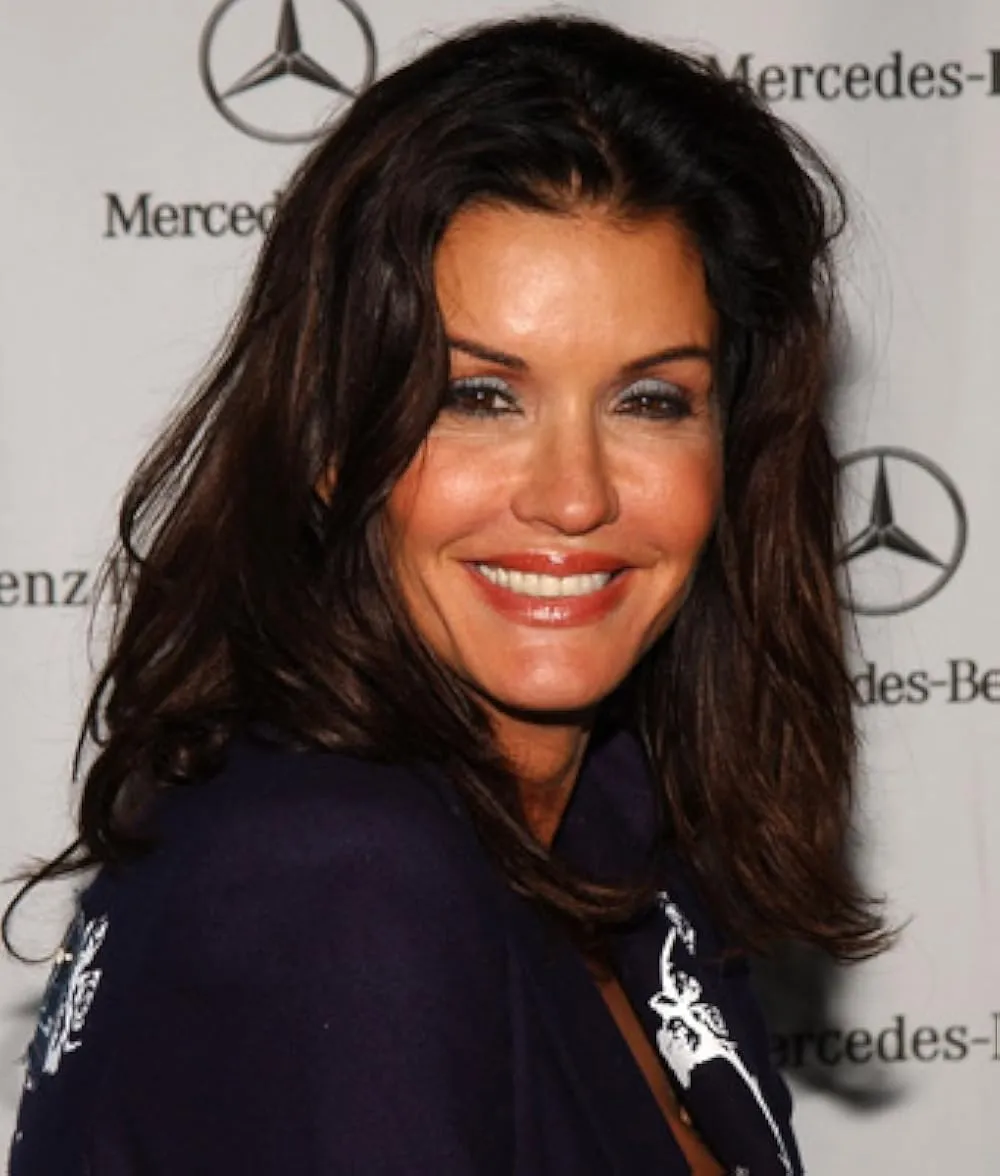
Janice Dickinson
Janice Dickinson made her name being the most unfiltered voice in any room — the supermodel-turned-judge whose critiques could end a casting before the model finished her walk. So it's fitting that her next act is teaching a machine to be just as ruthless. On May 19, 2026, TMZ reported that the self-described 'world's first supermodel' is launching Super Model AI, an app that watches your runway walk and critiques it in her signature style.
The launch is small on its face — a niche coaching tool for aspiring models — but it lands inside a much bigger 2026 story: the rush of public figures licensing, cloning, and AI-ifying their own personas. From influencers selling their digital likeness for nine figures to adult creators shipping AI versions of themselves, the line between a celebrity and a celebrity-shaped piece of software is dissolving fast. Dickinson, never one to miss a moment, just stepped through it.
Here's what Super Model AI actually does, who's building it, and why a runway-critique app is a useful lens on where AI personas are heading.
By the numbers
What it evaluates
AI feedback on posture, stride, turns, arm movement, and facial expressions from uploaded runway/audition videos
TMZHuman-in-the-loop hook
Standout submissions may be personally reviewed by Dickinson and featured on her social media
TMZSecond project
Interactive AI-powered coaching course in development via Flowroom (MasterClass-style)
TMZWhat Super Model AI actually does
According to TMZ, Super Model AI lets users upload runway or audition videos and receive AI-generated feedback on the mechanics of their walk: posture, stride, turns, arm movement, and facial expressions. The whole thing is modeled on Dickinson's famously unfiltered critique style — so the pitch isn't gentle encouragement, it's the digital equivalent of her sitting in the front row telling you exactly what's wrong.
There's a human-in-the-loop element too. TMZ reports that standout submissions may be personally reviewed by Dickinson herself and potentially featured on her social media — turning the app into a discovery funnel as well as a coaching tool. For an aspiring model, the dangling carrot is obvious: impress the algorithm trained on Janice, and maybe the real Janice sees you.
The app is being built with Flowroom, a platform that lets creators build AI-powered apps, and Dickinson is reportedly also developing an interactive AI coaching course through Flowroom — a MasterClass-style product with built-in tools for personalized guidance. Pricing wasn't disclosed in the reporting, and notably, TMZ's piece contained no attributed direct quotes from Dickinson herself; the details came via sources. We're flagging that so you can weigh the reporting accordingly.
Why a runway-critique app is smarter than it sounds
It's easy to dismiss Super Model AI as a gimmick, but the design is shrewd. Dickinson's entire brand asset is her judgment — the specific, quotable, intimidating way she evaluates a model. That's not easy to scale through one human being who can only be in one casting at a time. An AI trained on that judgment turns a finite personal resource into an infinitely available product.
This is the core logic of the celebrity-AI wave. A famous person's most valuable, least scalable asset is their attention and their distinctive 'voice.' AI is, at its core, a machine for cloning a voice and serving it at scale. Whether it's a modeling coach, a fitness guru, or a companion persona, the playbook is identical: capture what's distinctive about a person, train a model on it, and sell access to the clone for a fraction of what the original would cost.
Dickinson's version is on the wholesome end of the spectrum — career coaching, not romance. But the underlying machinery is the same one powering the booming AI companion industry, where personas are designed to feel intimate and attentive. The supermodel critiquing your stride and the AI companion remembering your birthday are running on the same fundamental idea: a human personality, abstracted into software, available on demand.
The archetype, alive
Characters who fit this exact vibe
More photos of Janice Dickinson
The bigger picture: 2026 is the year of the cloned persona
Dickinson's launch doesn't stand alone. It's part of a 2026 stampede. Influencers are signing massive deals to license their AI likeness — replicas that can reproduce their face, voice, expressions, and body language and appear in campaigns without them lifting a finger. Adult creators have launched AI clones of themselves that fans can chat with directly. Voice-cloning controversies involving major celebrities have become a recurring news cycle (see our [celebrity AI voice-cloning breakdown](/trending/celebrity-ai-voice-cloning-controversy-2026)).
What makes Dickinson's entry notable is how casual it is. A 1970s-era supermodel launching an AI coaching app barely registers as surprising anymore — which is exactly the point. The technology has normalized to the degree that an icon from the analog era of fashion can plausibly extend her brand into a machine-learning product and have it covered as a light TMZ item rather than a sci-fi shock.
The through-line across all of it — coaching apps, likeness deals, companion AIs — is that personality has become a licensable, cloneable asset. Some of this is empowering (a creator monetizing their expertise at scale). Some of it is fraught (likeness rights, consent, deepfakes). Dickinson's runway critic sits comfortably on the empowering side, but it's a useful, low-stakes example of the same force reshaping the entire creator economy.
What it tells us about AI companions specifically
If a critique app trained on Janice Dickinson can feel convincingly like Janice — sharp, specific, a little terrifying — then the more emotionally-tuned cousins of that technology are doing something even harder and arguably more impressive. AI companion apps aren't trying to replicate one critique style; they're trying to replicate the feeling of an ongoing relationship: memory, warmth, consistency, the sense of being known.
That's a higher bar than runway feedback, and the best companion products clear it surprisingly well. They remember context across sessions, adapt to your personality, and maintain a stable persona instead of resetting. The same Flowroom-style infrastructure that lets Dickinson scale her judgment lets companion platforms scale intimacy — a persona that's available whenever you open the app, attentive in a way busy humans often can't be.
The Dickinson story is a friendly on-ramp to a bigger truth about 2026: we're getting comfortable with AI versions of people. A model critic today, a companion tomorrow. If a roast-bot trained on a supermodel is genuinely useful, it's worth being curious about what a companion designed entirely around you — your humor, your pace, your boundaries — actually feels like.
The archetype, alive


Veronica · Valentina · Sofia
Curious what an AI built around you feels like?
A roast-bot trained on a supermodel is just the start. A companion designed entirely around your humor, your pace, and your boundaries is a different experience entirely.
你的人工智能女友
遇见那个懂你的人
调情、聊天、亲密。她记得你说的每一句话——而且她总是愿意倾听。
与她聊天 →Quick answers
What is Super Model AI?
+
Super Model AI is an app launched by Janice Dickinson on May 19, 2026, built with the creator-app platform Flowroom. Users upload runway or audition videos and get AI-generated critique on posture, stride, turns, arm movement, and facial expressions, delivered in Dickinson's signature unfiltered style. Standout submissions may be reviewed by Dickinson herself and featured on her social media.
Is the AI actually Janice Dickinson?
+
No — it's an AI modeled on her critique style, not the real person. The product trains on Dickinson's distinctive way of evaluating models so the feedback feels like hers, but the day-to-day critiques are generated by software. There is a human element: TMZ reports Dickinson may personally review standout submissions, so the real Janice sits behind the app as a final filter rather than answering every user herself.
How much does Super Model AI cost?
+
Pricing was not disclosed in the initial TMZ reporting that broke the launch. Given that Dickinson is also developing a separate MasterClass-style AI coaching course through Flowroom, it's likely the offering will be tiered, but we don't have confirmed numbers and won't invent them. Check the official launch details for current pricing before signing up.
Why is a supermodel launching an AI app a big deal?
+
On its own it's a niche tool, but it's a clean example of 2026's defining tech-culture trend: turning a public figure's most distinctive, least scalable asset — their judgment, voice, or persona — into a cloneable, on-demand product. The same underlying machinery powers influencer likeness deals and AI companion apps. Dickinson's launch shows how thoroughly that idea has normalized when an analog-era icon can do it as a casual brand extension.
How does this relate to AI companions?
+
Both run on the same core idea: abstracting a human personality into software you can access on demand. A critique app replicates one judgment style; a companion app replicates the feeling of an ongoing relationship — memory, warmth, consistency. The companion version is arguably harder to pull off, and the best products do it well: a stable persona that remembers you and is available whenever you open the app, rather than resetting each time.
More buzz like this

cultural moment
Why Creators Are Cloning Themselves With AI in 2026
The creator can't text 50,000 fans back. Her AI clone can. In 2026, cloning yourself stopped being sci-fi and became a business model — here's how it works.

cultural moment
The Celebrity Voice Cloning Wave of 2026 — What Apps Allow, What Laws Don't
Your favorite singer voicing a meme she never recorded? Welcome to AI's least-regulated year.
cultural moment
Brooks Nader, the Ocean, and an Unscripted Moment
One wave, one unscripted second, and the internet couldn't look away. Here's what that hunger really says about us.

cultural moment
Maura Higgins Owns SI Swim Miami 2026
One white dress, a Miami pool deck, and the kind of effortless allure the whole internet wishes it could keep on speed dial.