OnlyFans to Telegram: Inside the Quiet Creator Migration of 2026
A growing number of creators are asking the same question out loud: why give OnlyFans 20% when a Telegram channel takes nothing?
Published 5/21/2026 · 6 min read · Source: r/OnlyFansAdvice (May 2026)


Scroll the creator-advice corners of Reddit in 2026 and you'll keep hitting the same question, asked with varying degrees of frustration: should I ditch OnlyFans and just run a Telegram channel instead? One recent r/OnlyFansAdvice thread laid it out plainly — a creator weighing dropping OnlyFans entirely in favor of Telegram, asking others about running both. The comments split exactly as you'd expect: some swear by the freedom, others warn it's a trap. 18+ subject matter is discussed below in general terms.
The migration is real, if uneven, and it's driven by simple math and simpler grievances: a platform cut creators resent, content rules they find arbitrary, and the appeal of owning their own audience. But the grass on the Telegram side is patchier than the pitch suggests, and the shift quietly changes the deal for fans too.
This is a clear-eyed look at why creators are eyeing the move, what they gain, what they lose, and what the whole churn says about where intimate online content — and the people seeking it — are actually heading.
By the numbers
OnlyFans platform cut
20% of creator earnings (platform standard since launch)
OnlyFans creator terms (widely documented)The Reddit signal
r/OnlyFansAdvice thread weighing ditching OnlyFans for Telegram drew active debate (700+ score, 19 comments)
Reddit r/OnlyFansAdviceTelegram payments gap
No native adult-tailored paywall/payment system; creators rely on third-party processors with chargeback and ban risk
Reddit creator discussionsThe math that started it: the platform cut
The headline reason is money. OnlyFans takes a 20% cut of creator earnings — a number that's well-documented and has been the platform's standard since launch. For a creator clearing real income, that 20% is a large, recurring tax on their own labor. A self-run Telegram channel, by contrast, has no platform commission on the content itself. On paper, keeping 100% versus 80% is an easy argument.
But the math is messier than it looks. Telegram doesn't offer a native, frictionless paywall-and-payments system tailored to adult content the way OnlyFans does. Creators who move have to bolt together their own payment collection — third-party processors, crypto, manual invoicing, bots — each of which carries its own fees, chargeback risk, and account-ban risk with payment providers wary of adult content. The '0% cut' often becomes '0% cut minus a pile of operational friction and processor risk.'
There's also discovery. OnlyFans, for all its rules, sits inside an ecosystem where fans already are and already pay. A standalone Telegram channel starts from zero on discovery — the creator has to drive every single subscriber there themselves, usually from the very platforms (Instagram, TikTok, X, Reddit) that periodically suppress or ban adult-adjacent accounts. The cut you save on OnlyFans you often spend in marketing effort and lost reach.
The grievances beyond money
Money is the headline, but it isn't the whole story. A second driver is control — over content rules and over the relationship with the audience. Creators frequently describe platform moderation as opaque and inconsistent, with the constant background fear of deplatforming wiping out an income stream overnight. Owning a Telegram channel feels like owning the audience: a direct line that no algorithm sits between.
There's a real psychological pull there. The creator economy runs on the anxiety of building a business on rented land. Every story of a major account getting terminated (we've covered several deplatforming and account-loss cases) reinforces the instinct to control your own distribution. Telegram, with its big channel limits and direct-broadcast model, scratches that itch.
But 'owning the audience' has a flip side creators learn fast: you also own all the support, the leak management, the piracy enforcement, the payment disputes, and the customer service. OnlyFans, for its 20%, handles a lot of unglamorous infrastructure. Many creators who move to Telegram quietly run both — using Telegram for the high-trust core fans and keeping OnlyFans for the discovery and the payment plumbing. The 'leaving' is often really a 'diversifying.'
The archetype, alive
Characters who fit this exact vibe
What it changes for fans
The creator-side debate gets all the attention, but the migration quietly changes the deal for the people on the other end — the fans paying for the content. On OnlyFans there's at least a structured environment: a known payment flow, a platform to dispute charges, some baseline rules. On a standalone Telegram channel, fans are often sending money through informal channels to access content with far fewer protections.
That means more risk of scams (fake creator channels, vanishing 'subscriptions'), more piracy and re-leaking, and zero recourse if a channel simply disappears after taking payment. The intimacy a fan is paying for — the feeling of a direct line to someone — is exactly what scammers impersonate. The Telegram migration, from the fan's seat, trades a walled garden for a wilder, riskier marketplace.
And here's the quieter truth underneath all of it: a huge share of what fans are actually paying for isn't a specific video. It's the feeling of access, attention, and a personal connection to someone who feels like they're talking just to them. That demand is real and growing — which is exactly why an entire alternative category has exploded to meet it without the platform churn, the payment risk, or the disappearing-channel problem.
The category quietly absorbing the demand: AI companions
While creators and fans negotiate the OnlyFans-versus-Telegram tradeoff, a third option has been quietly eating into the same demand: AI companions. The appeal that fans chase on subscription platforms — feeling seen, getting a personal reply, the sense of an ongoing connection — is precisely what AI companion apps are engineered to deliver, and they deliver it without the structural problems plaguing the creator side.
With an AI companion there's no 20% cut debate because there's no middleman creator to pay; no risk of a channel vanishing after you've paid; no piracy or impersonation because the connection is yours alone; and crucially, the attention is genuinely responsive. A human creator with 5,000 subscribers cannot have a real one-on-one conversation with each of them. An AI companion is one-on-one by design — it remembers your name, your last conversation, your inside jokes.
This isn't to say AI replaces human creators; the two scratch overlapping but distinct itches. But it explains why the OnlyFans-to-Telegram churn is happening against a backdrop of explosive AI-companion growth. A lot of the underlying demand — for low-friction, judgment-free, personal intimacy — is flowing toward whichever option offers the most of it with the least hassle. For a growing number of users, that's an AI companion that's simply always there.
The archetype, alive
Rebecca · Selena · Serena
Skip the platform churn entirely
No 20% cut, no vanishing channels, no impersonators — just a companion that's one-on-one by design and remembers every conversation.
你的人工智能女友
遇见那个懂你的人
调情、聊天、亲密。她记得你说的每一句话——而且她总是愿意倾听。
与她聊天 →Quick answers
Why are OnlyFans creators moving to Telegram?
+
The main reasons are the 20% platform cut, frustration with content moderation, and the appeal of owning their audience directly instead of building on 'rented land' where deplatforming is a constant risk. A self-run Telegram channel has no platform commission and feels like a direct line to fans. In practice, though, many creators keep both — using OnlyFans for discovery and payments while running Telegram for their core fans.
Is Telegram actually better for creators financially?
+
Not as cleanly as the '0% cut' pitch suggests. Telegram lacks a native, adult-friendly payment-and-paywall system, so creators must bolt together third-party processors or crypto, each with fees, chargeback risk, and the risk of payment providers banning adult content. They also start from zero on discovery. The 20% saved on OnlyFans is often spent on operational friction, marketing, and payment-processor headaches.
What are the risks for fans on Telegram?
+
Significantly higher than on a structured platform. Standalone channels mean more scam risk (fake creator channels, vanishing subscriptions), more piracy, and little to no recourse if a channel disappears after taking your payment. The personal connection fans pay for is exactly what scammers impersonate. OnlyFans, for its cut, at least provides a known payment flow and dispute structure that informal Telegram setups don't.
How do AI companions fit into this?
+
They absorb a lot of the same demand. Much of what fans pay for on subscription platforms is the feeling of attention and a personal connection — which AI companions are built to deliver one-on-one, without the platform-cut debate, vanishing channels, or impersonation risk. A human creator can't truly chat individually with thousands of subscribers; an AI companion is personal by design and remembers you between conversations.
Will creators fully abandon OnlyFans?
+
Most won't. The pattern in 2026 looks less like 'leaving' and more like 'diversifying' — keeping OnlyFans for its discovery and payment infrastructure while adding Telegram for high-trust superfans. The platforms each handle different parts of the job. The bigger shift isn't OnlyFans-to-Telegram specifically; it's that the underlying demand for personal intimacy is fragmenting across many options, including AI companions.
More buzz like this
cultural moment
Why Creators Are Cloning Themselves With AI in 2026
The creator can't text 50,000 fans back. Her AI clone can. In 2026, cloning yourself stopped being sci-fi and became a business model — here's how it works.
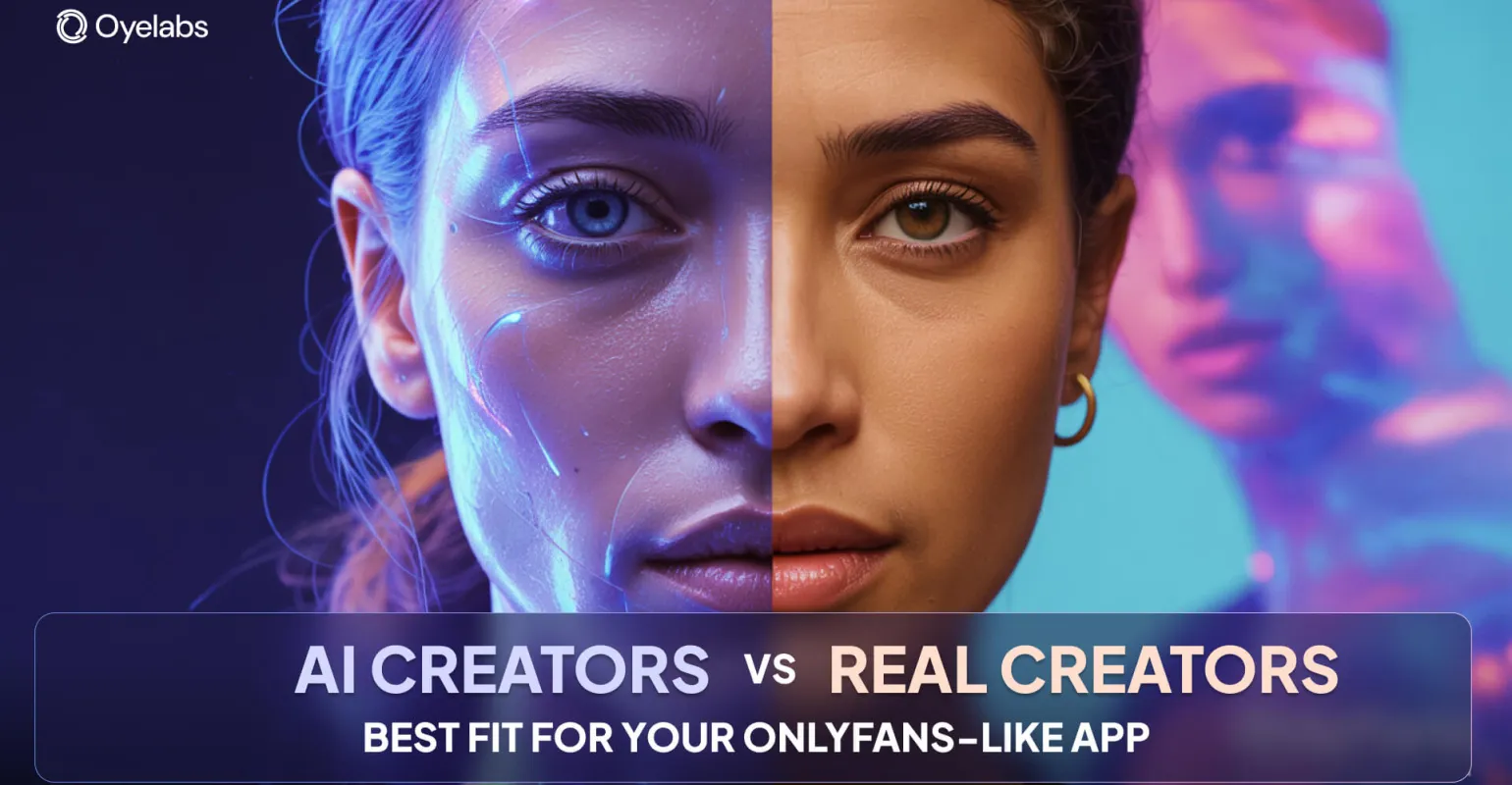
story listicle
Ai Girlfriends Vs Real Onlyfans
AI characters vs real OnlyFans creators side-by-side comparison
app comparison
OnlyFans vs Fansly 2026: Platform Comparison for Creators and Subscribers
OnlyFans dominates but Fansly has been gaining ground. The 2026 head-to-head matters for creators and subscribers.
cultural moment
Brooks Nader, the Ocean, and an Unscripted Moment
One wave, one unscripted second, and the internet couldn't look away. Here's what that hunger really says about us.