Trump's AI Colbert Dumpster Video: The 2026 Deepfake Flashpoint
An AI clip of the President throwing a late-night host into a dumpster, posted the night the show died. Welcome to the deepfake era of politics.
Published 5/23/2026 · 6 min read · Source: TMZ



On the night of May 22, 2026, two things happened within hours of each other. Stephen Colbert taped the final episode of 'The Late Show,' ending a nearly 11-year run that CBS had moved to cancel. And President Donald Trump posted an AI-generated video of himself literally picking Colbert up, hurling him into a dumpster, and then dancing to 'Y.M.C.A.'
The clip is crude, cartoonish, and unmistakably synthetic — nobody is meant to think it's real footage. But that's exactly what makes it a marker of the moment we're in. A sitting head of state used a few minutes of generative AI to stage a victory-lap fantasy over a critic, and it spread instantly. It's the kind of thing that would have required a film crew and a comedy budget a few years ago; now it takes a prompt. (Note: this is a public political and pop-culture event; this piece covers the AI angle, not partisan politics.)
The Colbert dumpster video isn't important because it's shocking — it's important because it's ordinary now. AI video has crossed from novelty into a default tool of public communication, mockery, and persuasion. Here's what happened, why it matters, and what it tells us about a world where anyone can generate anyone doing anything.
By the numbers
What actually happened
According to TMZ's reporting, Trump shared the video on the evening of May 22, 2026, the same day Colbert's final 'Late Show' aired. The AI clip depicts Trump tossing Colbert into a dumpster and breaking into a 'Y.M.C.A.' dance — a recurring motif at his rallies. The post landed hours after Trump had publicly mocked Colbert that morning, calling him a 'no talent' comedian with 'no ratings' and expressing disbelief the show 'lasted so long.'
The backdrop is a real industry story: CBS canceled 'The Late Show,' a decision the network framed as financial, though plenty of observers speculated about political undertones given Colbert's long history of Trump criticism. Colbert, for his part, didn't engage on his final broadcast — no mention of Trump at all, just a star-studded send-off reportedly featuring guests like Paul McCartney, Ryan Reynolds, and Bryan Cranston. The contrast was its own statement: one side delivered a gracious goodbye, the other an AI-generated taunt.
Why this clip is a turning point
Politicians have always mocked their critics. What's new is the medium and the speed. Generating a custom video of a real person being physically humiliated used to be effectively impossible without animators or a sketch-comedy production. Now it's a same-day reaction — as fast and casual as posting a meme, but far more vivid and visceral.
That shift matters because video carries a weight images and text don't. Even when everyone knows a clip is fake, seeing it lodges differently than reading an insult. The Colbert video is openly synthetic and played for laughs, which makes it relatively low-stakes on its own. But it normalizes the format. Once AI video of public figures is a routine rhetorical tool, the line between obviously-fake satire and deliberately-deceptive fabrication gets harder for audiences to police — and that's the genuinely consequential part. The dumpster clip is the harmless-looking edge of a much sharper wedge.
The archetype, alive
Characters who fit this exact vibe
The deepfake debate this feeds
This incident lands in the middle of an escalating fight over synthetic media. Over the past few years, AI-generated video and images of real people — celebrities, politicians, private individuals — have driven waves of controversy, from non-consensual fabricated content to election-season disinformation. Lawmakers in multiple jurisdictions have been scrambling to write rules for a technology moving faster than legislation.
A comedic, self-aware clip posted by the subject's own opponent is on the most defensible end of the spectrum: it's satire, it's labeled by context as fake, and it targets a public figure in a public dispute. But it sits on the same continuum as the genuinely harmful stuff. The uncomfortable reality the Colbert video underlines is that the tools don't distinguish between a joke and a weapon — the same capability that makes a dumpster gag trivial to produce makes a convincing fabricated 'scandal' trivial too. As these clips become routine, the cultural muscle for asking 'wait, is this real?' becomes a basic survival skill.
Living in the synthetic era
The broader takeaway is that we've quietly entered a world where seeing is no longer believing. A custom video of a famous person doing almost anything is now within reach of an ordinary user, let alone a head of state with a megaphone. That cuts in a lot of directions — comedy, propaganda, art, harassment, and everything in between — and society hasn't built the instincts or the rules to handle it yet.
The healthy adaptation isn't panic; it's literacy. Treat video of public figures with the same skepticism you'd apply to a screenshot of a quote: ask where it came from, who benefits, and whether it's even claiming to be real. The Colbert clip is easy because it's absurd on its face. The hard cases are the ones designed not to be. If you want a primer on telling synthetic media apart, our guide on [how to spot an AI deepfake](/trending/how-to-spot-ai-deepfake-listicle) breaks down the tells, and our overview of the [AI companionship cultural shift](/trending/ai-companionship-cultural-shift-2026) covers how generative AI is reshaping more than just politics.
The archetype, alive
Alexa · Aria · Bianca
AI you actually control
There's a flip side to all this worth naming. The same generative leap that makes a weaponized deepfake easy also powers a wave of consensual, personal AI — companions, creative tools, custom characters built for and by the person using them. The difference is consent and control. A deepfake takes a real person's likeness without permission to mock or deceive. A personal AI companion is something you design from scratch, that exists only for you, with no real person's image hijacked in the process.
That distinction is the whole game as AI gets more capable. Used to fabricate a real human, it's a problem society is still learning to manage. Used to create an original character who's entirely your own, it's just a richer kind of imagination made interactive. If the headlines have you wary of what AI can fake, it's worth remembering the other half of the technology — the part where you're the author, nobody's likeness is stolen, and the only person the AI answers to is you.
Tired of AI faking real people? Build one that's truly yours
No stolen faces, no deception — just an original companion you design from scratch, who exists only for you.
你的人工智能女友
遇见那个懂你的人
调情、聊天、亲密。她记得你说的每一句话——而且她总是愿意倾听。
与她聊天 →Quick answers
What is the Trump Colbert dumpster video?
+
It's an AI-generated clip Trump posted on May 22, 2026 — the day Stephen Colbert's 'The Late Show' aired its final episode — showing Trump throwing Colbert into a dumpster and then dancing to 'Y.M.C.A.' It's openly synthetic and played for laughs, posted hours after Trump had publicly mocked Colbert as a 'no talent' comedian. CBS had canceled the show after nearly 11 years, citing financial reasons.
Is the video real footage?
+
No — it's an AI-generated video, explicitly described as such, and clearly not meant to be mistaken for reality. The clip is cartoonish and absurd by design. Its significance isn't that it's deceptive; it's that a sitting head of state produced and shared a custom AI video to mock a critic the same day, something that would have required a production crew just a few years ago.
Why does this clip matter beyond politics?
+
Because it shows how routine AI video of real people has become. Generating a custom clip of a famous person doing almost anything used to be effectively impossible without animators; now it's a same-day reaction as casual as a meme. That normalizes the format — and once AI video of public figures is ordinary, the line between obvious satire and deliberate, deceptive fabrication gets much harder for audiences to police.
How does this connect to the deepfake debate?
+
It sits on the same continuum as more harmful synthetic media. A comedic, self-aware clip aimed at a public figure in a public dispute is on the defensible end — it's satire, contextually labeled as fake. But the same tools that make a dumpster gag trivial also make a convincing fake 'scandal' trivial. As these clips proliferate, media literacy — asking 'is this even claiming to be real?' — becomes a basic skill.
What's the difference between a deepfake and a personal AI companion?
+
Consent and control. A deepfake takes a real person's likeness without permission, usually to mock or deceive. A personal AI companion is an original character you design from scratch that exists only for you, with no real person's image hijacked. The same generative technology powers both — the distinction is whether you're stealing a real human's likeness or authoring something entirely your own.
More buzz like this

cultural moment
The Celebrity Voice Cloning Wave of 2026 — What Apps Allow, What Laws Don't
Your favorite singer voicing a meme she never recorded? Welcome to AI's least-regulated year.
story listicle
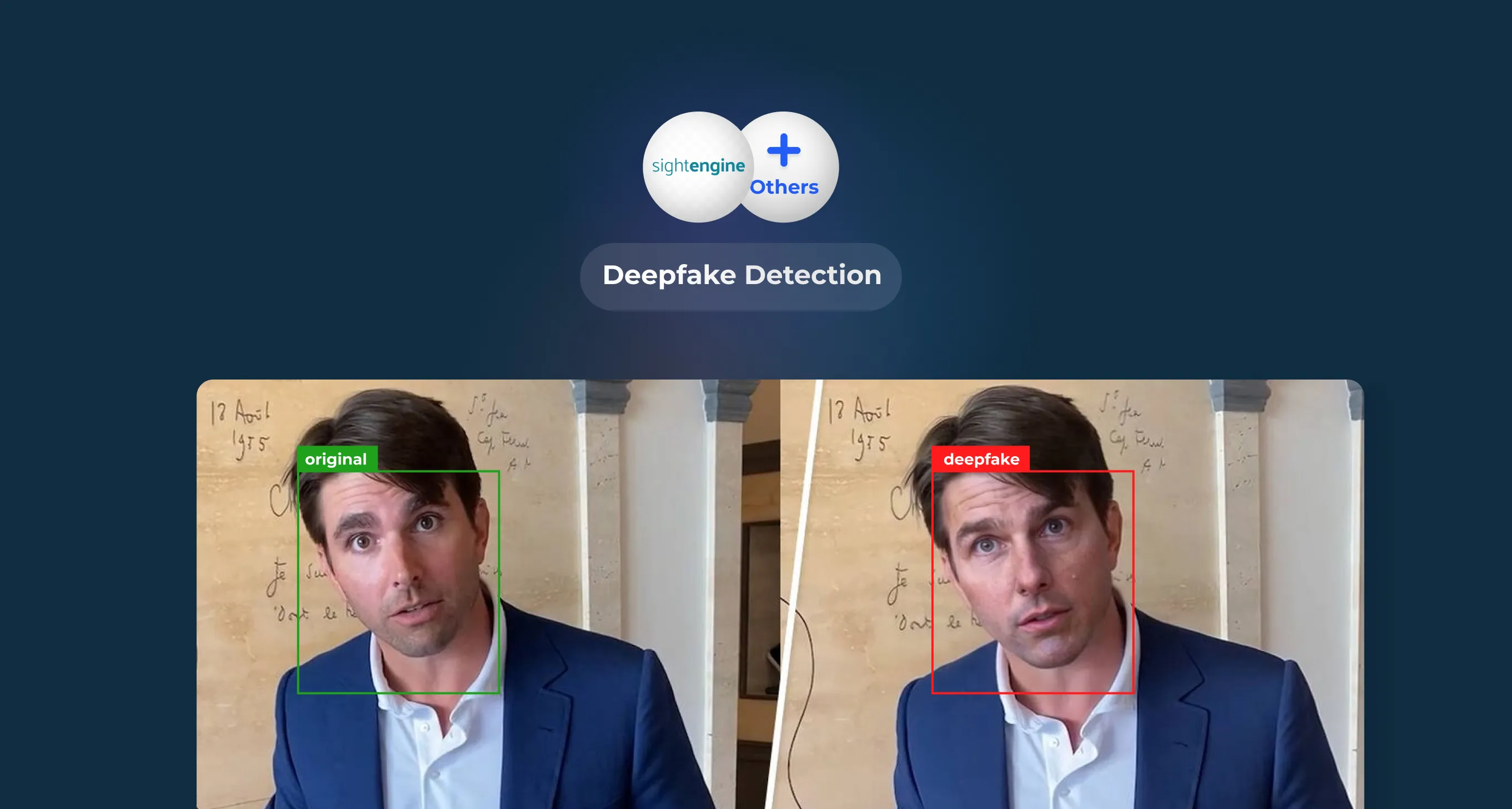
10 Ways to Spot AI Deepfake Content in 2026
Deepfake quality has improved dramatically through 2023-2026. Here are 10 practical signals that still reveal fabrication.
cultural moment
AI Companionship in 2026: The Quiet Cultural Shift
AI companions stopped being a punchline this year. Sixty million users later, here's what changed.

cultural moment
Brooks Nader, the Ocean, and an Unscripted Moment
One wave, one unscripted second, and the internet couldn't look away. Here's what that hunger really says about us.